Side · vegetable
Blistered Green Beans, Garlic and Sesame
Green beans seared hard in a dry-hot skillet until wrinkled and charred in spots, finished with garlic, soy, and sesame.
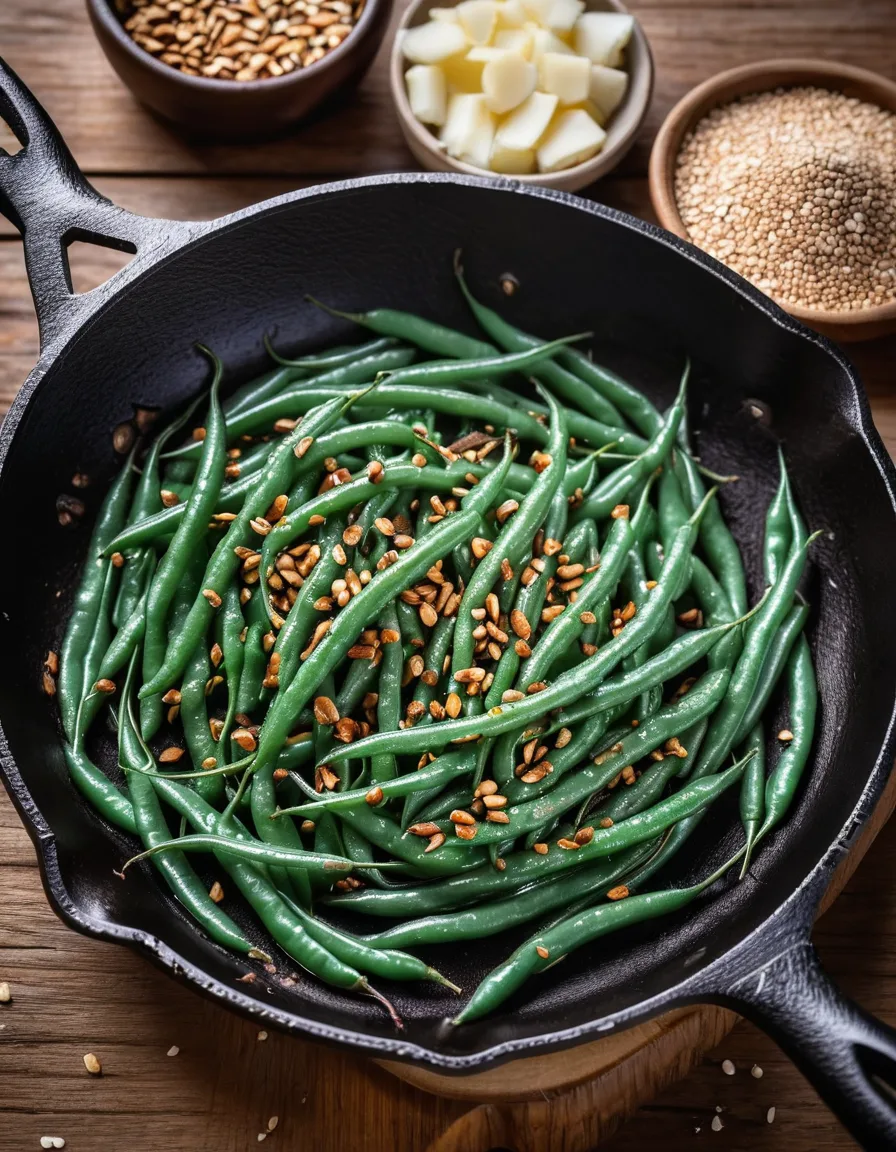
Ingredients · 4 servings
| 1 lb | green beans grow it ↗ |
| 1.5 tbsp | neutral oil · pantry |
| 3 cloves | garlic grow it ↗ |
| 1 tbsp | soy sauce · pantry |
| 1 tsp | rice vinegar · pantry |
| 1 tsp | toasted sesame oil · pantry |
| 1 tbsp | toasted sesame seeds |
Method
- Heat a large skillet over high heat until it just begins to smoke. Add the oil, then the beans in a single layer.
- Cook undisturbed 2 minutes, then toss and keep cooking 5-6 minutes, tossing only occasionally, until the beans are wrinkled and blackened in spots.
- Reduce the heat to medium, push the beans aside, and cook the garlic in the cleared space 30 seconds, until fragrant and pale gold.
- Off the heat, add the soy sauce, vinegar, and sesame oil and toss until the beans are coated. Top with sesame seeds.
Nutrition · per serving
Estimated from this recipe's ingredients, not lab-measured — not a substitute for professional dietary advice.
Advertisement
The Why · No Anecdotes
The science, not a story about my childhood.
Why do the beans have to be dry?
Water on the surface has to boil off before the surface can rise above 212°F, and browning reactions need far more heat than that. Wet beans steam in their own moisture and turn soft and army-green long before they blister.
Why does the garlic go in at the end?
Thin slices of garlic have very little water and a lot of sugar, so at blistering heat they go from raw to bitter and burnt in seconds. Dropping the heat and adding them last gives them just enough time to turn fragrant.
Why add the soy sauce off the heat?
Soy sauce poured into a ripping-hot pan flashes to steam and its sugars and amino acids scorch onto the metal. Off the heat it stays liquid long enough to coat the beans instead of the pan.