Side · vegetable
Charred Cabbage Wedges, Lemon-Tahini Sauce
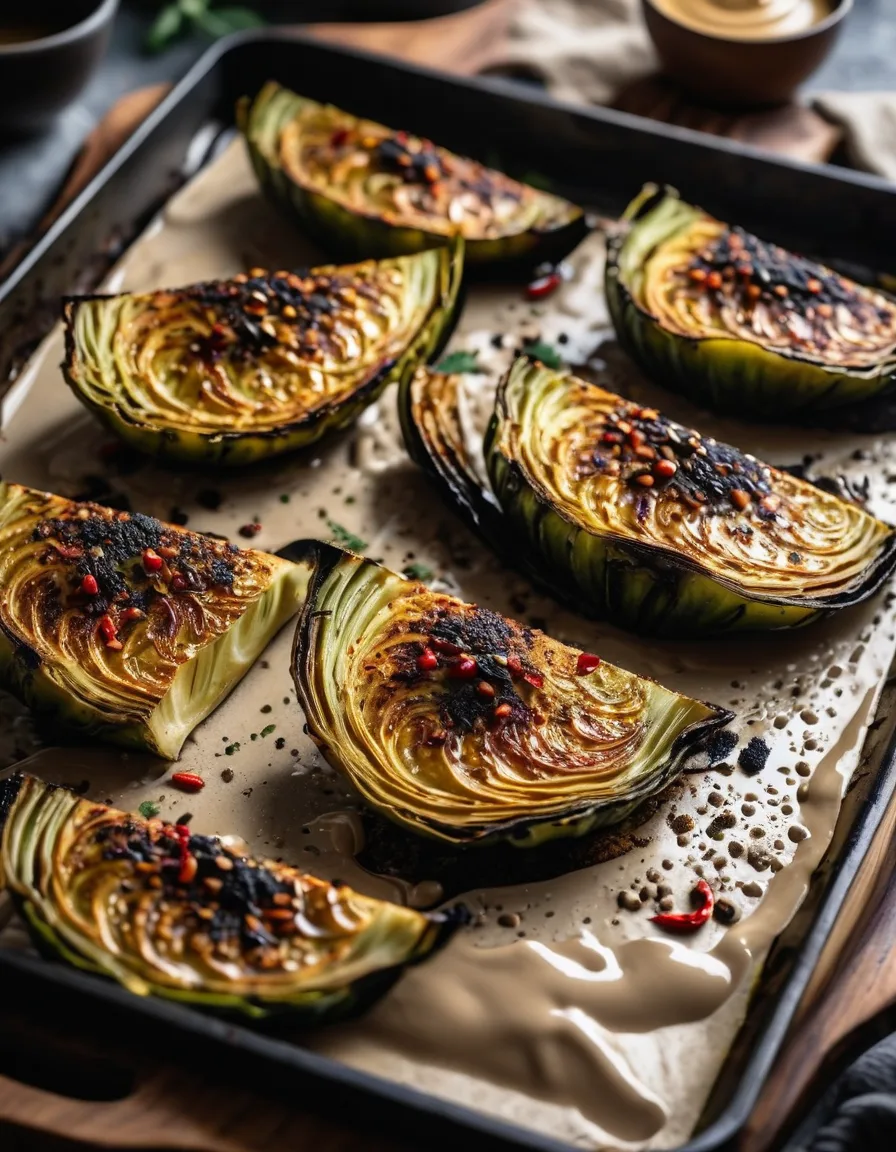
Cabbage wedges roasted at high heat until the edges blacken and the centers turn sweet, drizzled with a lemon-tahini sauce.
Ingredients · 4 servings
| 1 small head | green cabbage |
| 3 tbsp | olive oil · pantry |
| 1 tsp | kosher salt · pantry |
| 3 tbsp | tahini |
| 1 whole | lemon |
| 1 clove | garlic grow it ↗ |
| 0.25 tsp | red chili flakes grow it ↗ · pantry |
Method
- Heat the oven to 450°F with a rimmed sheet pan inside.
- Brush the cabbage wedges on both cut sides with the olive oil and season with 3/4 teaspoon of the salt.
- Lay the wedges on the hot pan, cut side down. Roast 15 minutes, until the undersides are charred. Turn and roast 10-12 minutes more, until the cores are tender when pierced.
- Whisk the tahini, lemon juice, garlic, and remaining salt. It will stiffen. Whisk in 2-3 tablespoons water, a little at a time, until it is smooth and pourable.
- Drizzle the sauce over the wedges and finish with chili flakes.
Nutrition · per serving
Estimated from this recipe's ingredients, not lab-measured — not a substitute for professional dietary advice.
Advertisement
The Why · No Anecdotes
The science, not a story about my childhood.
Why does cabbage turn sweet when charred?
Raw cabbage tastes sharp because of sulfur compounds. High, dry heat drives many of those off and browns the natural sugars in the leaves, which adds sweetness and a nutty, toasted flavor. Boiled cabbage keeps the sulfur and gets none of the browning.
Why does tahini seize when you add lemon juice?
Tahini is ground sesame solids suspended in oil. The first bit of liquid makes those solids absorb water and clump, so the paste thickens. Add more and there is enough water for the solids to disperse, and the mixture relaxes into a smooth, creamy sauce.