Entrée
Chicken Adobo
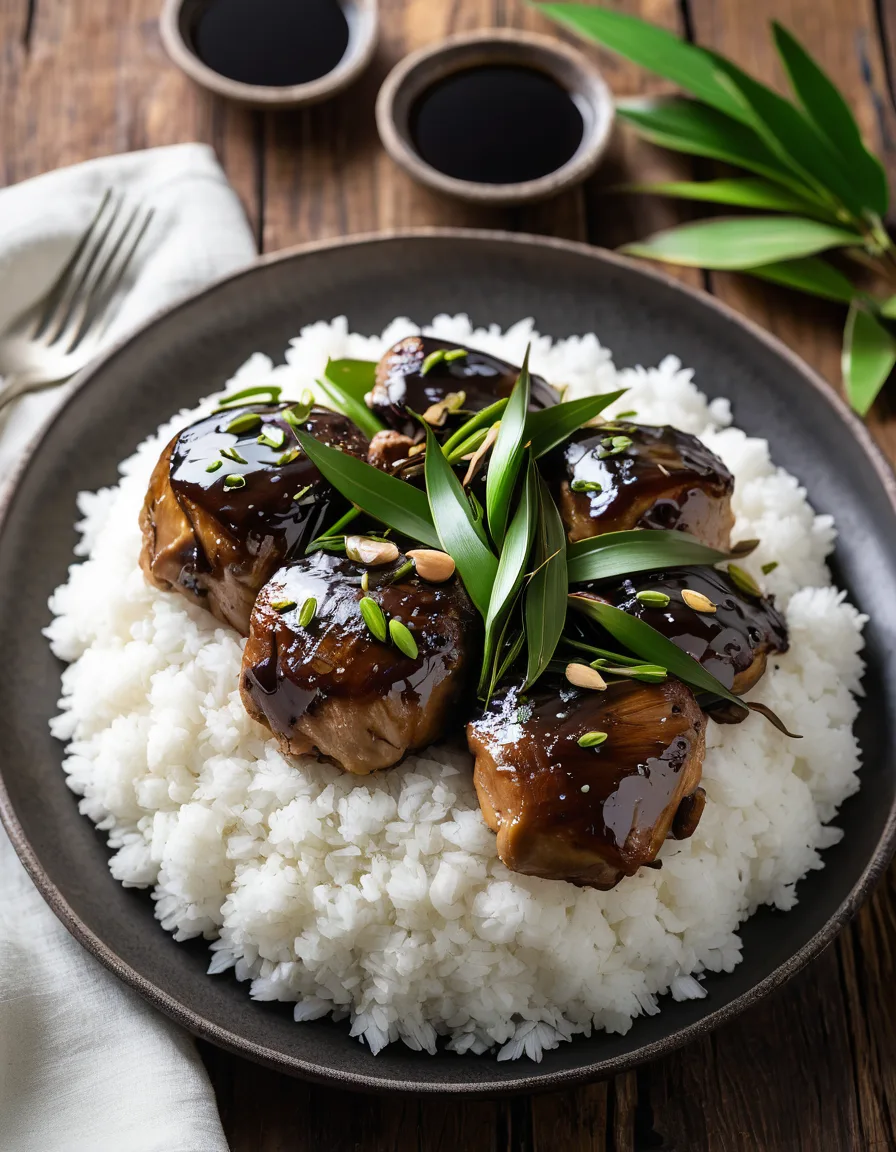
Chicken thighs braised in soy, vinegar, and a whole head's worth of garlic, then reduced until the sauce turns to glaze.
Ingredients · 4 servings
| 1.5 cups | jasmine rice · pantry |
| 2 lb | bone-in, skin-on chicken thighs |
| 1 tbsp | neutral oil · pantry |
| 8 cloves | garlic grow it ↗ |
| 0.33 cup | soy sauce · pantry |
| 0.5 cup | distilled white vinegar · pantry |
| 3 whole | bay leaves · pantry |
| 1 tsp | black peppercorns · pantry |
| 1 tsp | brown sugar · pantry |
| 2 whole | scallions grow it ↗ |
Method
- Start the rice according to the package.
- Heat the oil in a Dutch oven or deep skillet over medium-high heat. Add the chicken skin-side down and cook 6-7 minutes without moving it, until the skin is deep golden. Turn and brown the second side 2 minutes. Pour off all but about 1 tablespoon of fat.
- Add the garlic and stir 30 seconds. Add the soy sauce, vinegar, 1/2 cup water, bay leaves, peppercorns, and sugar and bring to a boil.
- Reduce the heat to low, cover, and simmer 25 minutes, turning the chicken once, until it is tender and reads at least 175°F (well past the 165°F / 74°C safe minimum).
- Uncover, raise the heat to medium-high, and boil 8-10 minutes, turning the chicken in the sauce, until the liquid has reduced to a glossy glaze that coats it.
- Serve over the rice with the garlic and sauce spooned over and the scallions on top.
Nutrition · per serving
Estimated from this recipe's ingredients, not lab-measured — not a substitute for professional dietary advice.
Advertisement
The Why · No Anecdotes
The science, not a story about my childhood.
Why cook thighs past 165°F?
Chicken is safe at 165°F, but thighs are full of connective tissue that only breaks down into gelatin with more heat and time. Between about 175°F and 190°F that collagen melts, which is what makes braised dark meat tender and silky instead of rubbery. Breast meat has almost no collagen, so the same treatment only dries it out.
Why so much vinegar?
Half a cup sounds harsh, but acetic acid is volatile: a good share of the sharpness boils off during the uncovered simmer. What stays is enough acid to balance the salt of the soy sauce and the richness of the rendered chicken fat, which is why the dish tastes bright rather than heavy.
Why does the sauce turn glossy as it reduces?
Reducing concentrates the gelatin that leached out of the chicken along with the dissolved sugars and salt. That thicker liquid can hold tiny droplets of the remaining chicken fat in suspension, and an emulsion of fat in a gelatin-rich liquid reflects light as a glaze.
Suggested sides — swap freely