Side · grain
Cold Sesame Soba
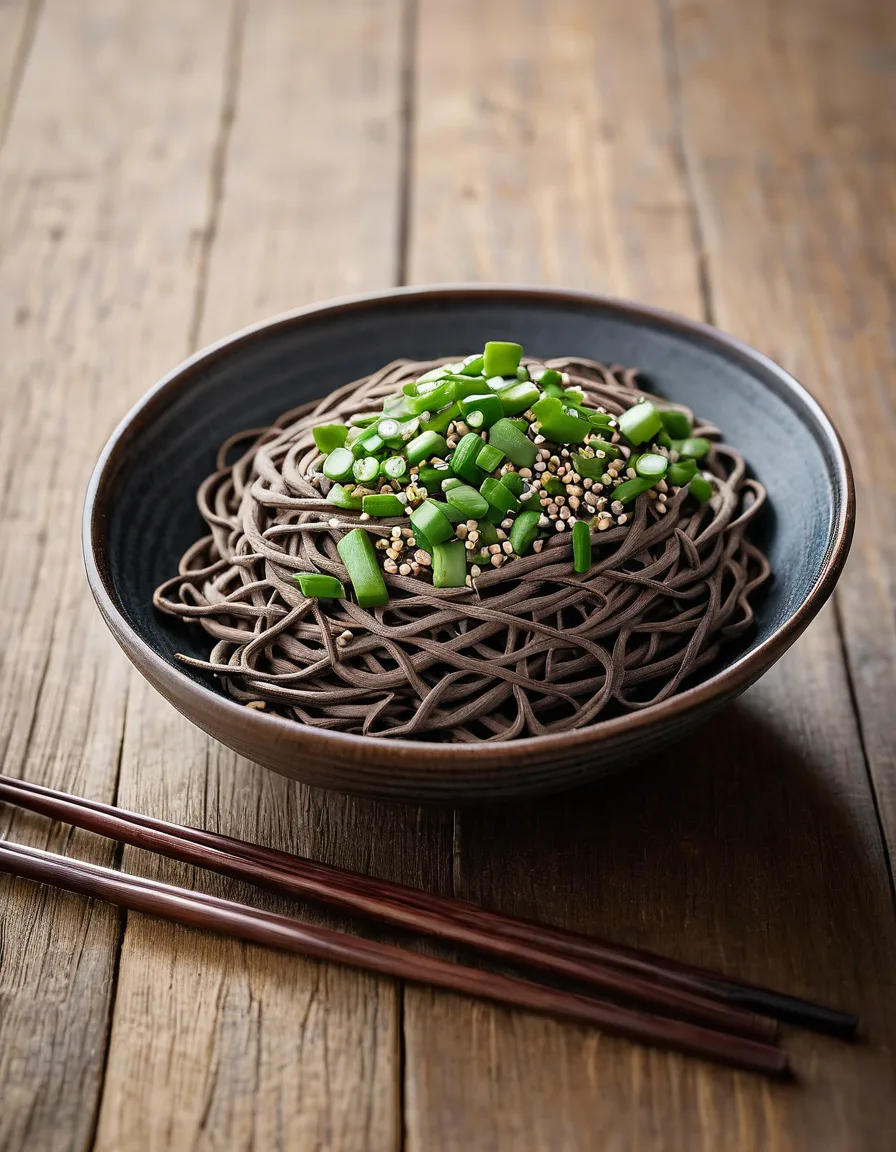
Buckwheat noodles rinsed cold until they stop feeling slick, tossed in soy, rice vinegar, sesame oil, and ginger.
Ingredients · 4 servings
| 8 oz | dried soba noodles |
| 2 tbsp | soy sauce · pantry |
| 1 tbsp | rice vinegar · pantry |
| 1 tbsp | toasted sesame oil · pantry |
| 1 tsp | honey · pantry |
| 1 tsp | ginger grow it ↗ |
| 3 whole | scallions grow it ↗ |
| 1 tbsp | toasted sesame seeds |
Method
- Boil the soba in a large pot of unsalted water according to the package, usually 4-5 minutes, stirring gently once or twice.
- Drain and rinse under cold running water, rubbing the noodles between your hands, until they are cold and no longer feel slippery. Drain well.
- Whisk the soy sauce, vinegar, sesame oil, honey, and ginger in a serving bowl.
- Add the noodles and toss to coat. Top with scallions and sesame seeds.
Nutrition · per serving
Estimated from this recipe's ingredients, not lab-measured — not a substitute for professional dietary advice.
Advertisement
The Why · No Anecdotes
The science, not a story about my childhood.
Why rinse and rub the noodles?
Soba sheds a heavy layer of surface starch as it cooks. Left on, it sets into a sticky film as the noodles cool and welds them into a clump. Rinsing while rubbing strips that layer off, and the cold water stops the noodles from cooking further.
Why is soba more fragile than wheat pasta?
Buckwheat has no gluten, the stretchy protein network that holds wheat noodles together. Most soba includes some wheat flour for that reason, but the strands are still weaker, which is why they are stirred gently and cooked only a few minutes.