Side · legume
French Lentils, Mustard Vinaigrette
Small green lentils simmered until just tender and dressed while still warm in Dijon, shallot, and red wine vinegar.
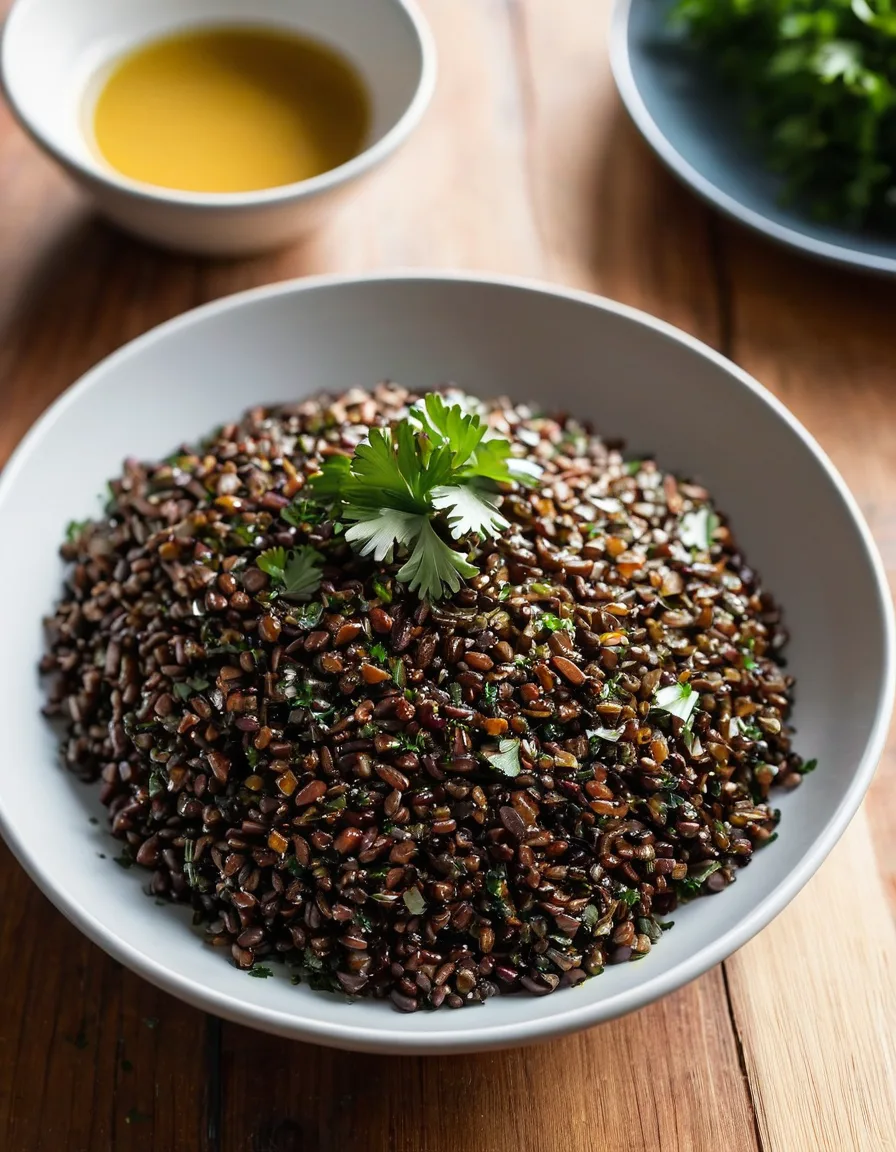
Ingredients · 4 servings
| 1 cup | French green lentils |
| 1 whole | bay leaf · pantry |
| 1 clove | garlic grow it ↗ |
| 0.75 tsp | kosher salt · pantry |
| 1 tbsp | Dijon mustard · pantry |
| 2 tbsp | red wine vinegar · pantry |
| 1 small | shallot |
| 3 tbsp | olive oil · pantry |
| 0.25 cup | flat-leaf parsley grow it ↗ |
Method
- Combine the lentils, bay leaf, garlic, salt, and 3 cups water in a medium saucepan. Bring to a boil, then simmer gently 20-25 minutes, until tender but still holding their shape.
- Drain well and discard the bay leaf and garlic.
- In the same warm pot, whisk the mustard, vinegar, and shallot, then whisk in the olive oil until thick.
- Return the hot lentils to the pot and toss. Let sit 5 minutes, then stir in the parsley. Serve warm or at room temperature.
Nutrition · per serving
Estimated from this recipe's ingredients, not lab-measured — not a substitute for professional dietary advice.
Advertisement
The Why · No Anecdotes
The science, not a story about my childhood.
Why dress them warm?
Hot, freshly cooked lentils are swollen and porous, and as they cool they contract and draw in the liquid around them. Dressed at that point, the vinaigrette ends up inside the lentil. Dressed cold, it only sits on the surface.
Why French green lentils instead of brown?
The small green varieties have a thicker seed coat and a firmer interior, so they stay whole at the point of tenderness. Brown and red lentils break down much sooner, which is ideal for soup and wrong for a salad.
What is the mustard doing besides adding flavor?
Oil and vinegar separate on their own. Compounds in mustard seed coat the tiny oil droplets formed by whisking and keep them from merging back together, so the dressing stays thick and clings.