Entrée
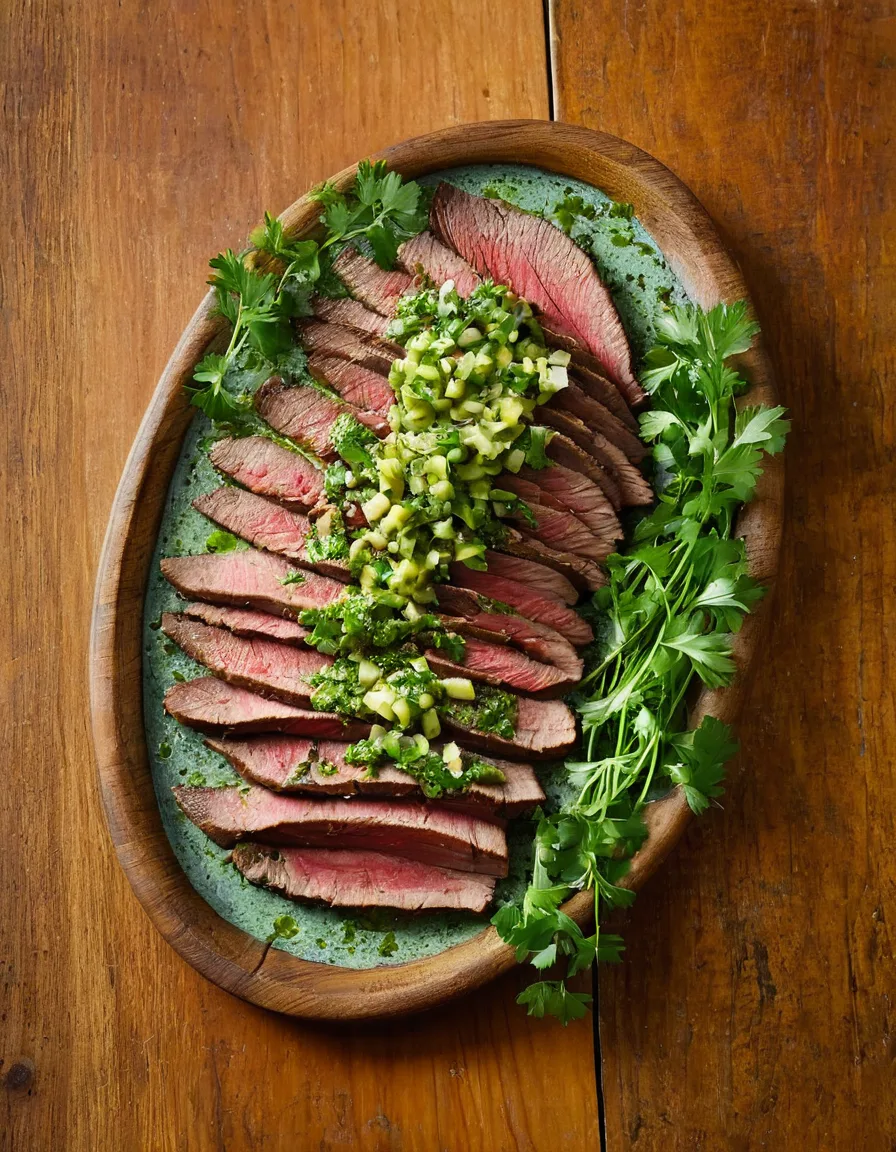
Pan-Seared Flank Steak, Herb Salsa Verde
A hard sear, a short rest, and a bright chopped herb sauce built in the same bowl you'll serve it from.
Ingredients · 4 servings
| 1.5 lb | flank steak |
| 1 tsp | kosher salt · pantry |
| 0.5 tsp | black pepper · pantry |
| 3 tbsp | olive oil · pantry |
| 1 cup | flat-leaf parsley grow it ↗ |
| 2 clove | garlic grow it ↗ |
| 2 tbsp | capers · pantry |
| 2 tbsp | red wine vinegar · pantry |
| 1 tsp | dijon mustard · pantry |
| 2 | scallions grow it ↗ |
| 0.25 tsp | red pepper flakes · pantry |
Method
- Pat the flank steak fully dry and season both sides heavily with salt and pepper. A dry surface sears; a wet one steams.
- Heat 2 tbsp olive oil in a heavy skillet over high heat until it just starts to shimmer.
- Sear the steak 4-5 minutes per side, undisturbed, until a deep brown crust forms. Pull it at 145°F / 63°C for medium-rare.
- Transfer the steak to a cutting board and rest for at least 5-10 minutes before slicing — do not skip this.
- While the steak rests, combine parsley, garlic, capers, scallions, red wine vinegar, dijon, red pepper flakes, and remaining 1 tbsp olive oil in a bowl. Stir and season with salt to taste.
- Slice the steak thinly against the grain — perpendicular to the visible muscle fibers, not parallel to them.
- Fan the slices on a platter and spoon the salsa verde over the top. Serve immediately.
Nutrition · per serving
Estimated from this recipe's ingredients, not lab-measured — not a substitute for professional dietary advice.
Advertisement
The Why · No Anecdotes
The science, not a story about my childhood.
Why does a screaming-hot pan matter more than cook time for a good crust?
Browning (the Maillard reaction) only kicks in above roughly 300°F / 150°C. A pan that's hot enough hits that threshold fast, before the meat's surface moisture has time to steam off slowly — so you get a dark crust with less overcooked gray meat underneath.
Why slice flank steak against the grain instead of with it?
Flank steak has long, visible muscle fibers running in one direction. Cutting parallel to them leaves long tough strands intact. Cutting perpendicular severs those fibers into short segments, so your teeth do far less work — the same cook, chewed very differently.
Suggested sides — swap freely