Entrée
Pan-Seared Haddock, Brown Butter-Hazelnut Sauce
Flaky seared haddock under a nutty brown butter sauce with sage and lemon — one skillet, restaurant-grade in 22 minutes.
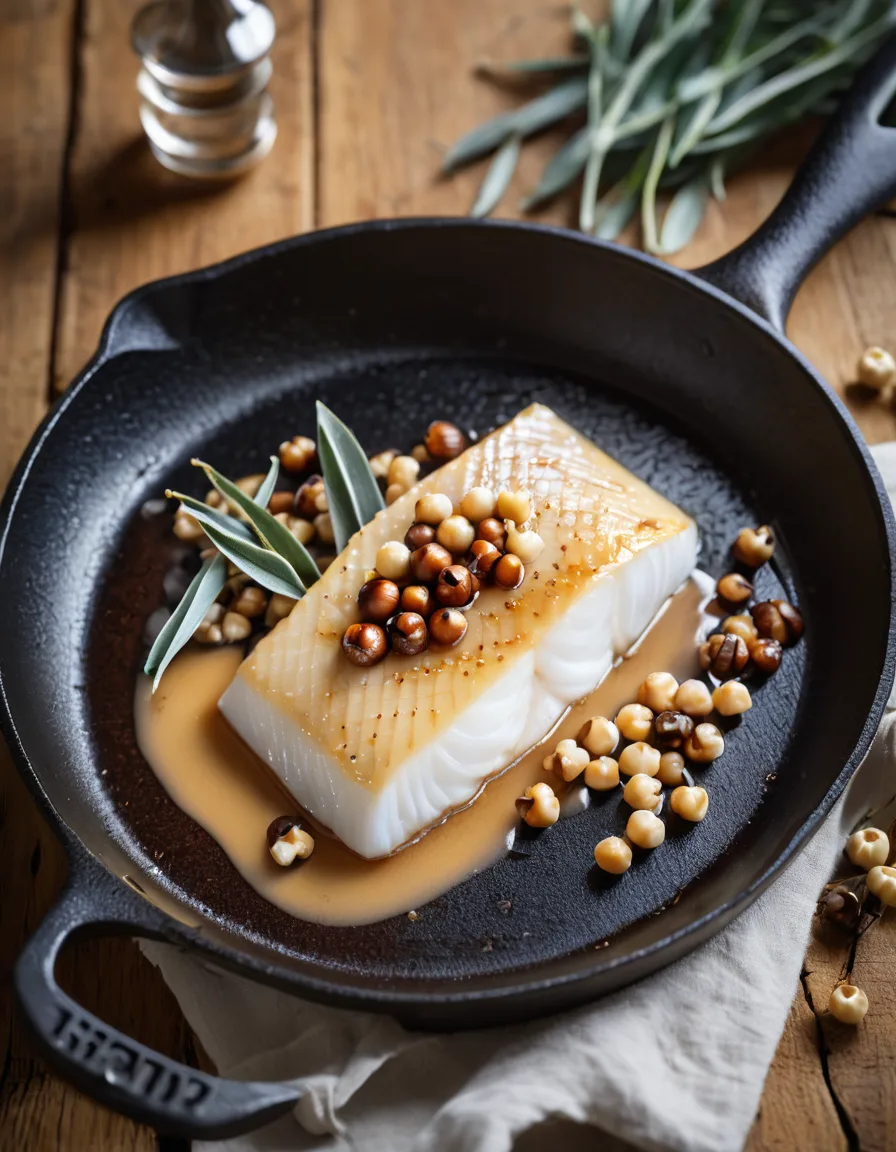
Ingredients · 4 servings
| 4 6 oz each | haddock fillets |
| 1 tsp | kosher salt · pantry |
| 0.5 tsp | black pepper · pantry |
| 3 tbsp | all-purpose flour · pantry |
| 6 tbsp | unsalted butter · pantry |
| 0.33 cup | hazelnuts |
| 8 leaves | fresh sage leaves grow it ↗ |
| 2 clove | garlic grow it ↗ · pantry |
| 1 whole | lemon |
| 1 tbsp | olive oil · pantry |
Method
- Pat haddock fillets completely dry and season both sides with salt and pepper. Dust lightly with flour, shaking off excess.
- Heat olive oil in a large skillet over medium-high heat until shimmering. Add fillets and sear 3-4 minutes per side, until golden and the fish flakes easily and reaches 145°F / 63°C internally. Transfer to a plate and tent loosely with foil.
- Wipe out the skillet. Add butter and melt over medium heat. Continue cooking, swirling often, until the milk solids turn amber and smell nutty, about 3 minutes.
- Add hazelnuts and sage leaves to the browned butter and cook 30-60 seconds, until sage crisps and nuts toast further.
- Off heat, stir in garlic, lemon juice, and lemon zest; garlic should sizzle and soften in the residual heat without burning.
- Spoon the brown butter-hazelnut sauce over the haddock fillets and serve immediately.
Nutrition · per serving
Estimated from this recipe's ingredients, not lab-measured — not a substitute for professional dietary advice.
Advertisement
The Why · No Anecdotes
The science, not a story about my childhood.
Why flour the fish before searing instead of leaving it bare?
A thin flour coat absorbs surface moisture and gelatinizes on contact with hot oil, forming a dry, crisp barrier between the fish and the pan. This prevents the delicate flesh from steaming or sticking, and the starch itself browns via Maillard reaction, adding color and flavor the bare fillet couldn't develop on its own.
Why does butter turn brown and nutty instead of just melting?
Butter is about 80% fat, 15-17% water, and the rest milk solids (proteins and lactose). Once the water boils off, the temperature climbs past 250°F and the milk solids undergo Maillard browning, turning amber and producing nutty, toasted compounds. Pull it at the first wisp of brown foam — it continues darkening from residual heat and crosses into burnt quickly.
Suggested sides — swap freely