Entrée
Seared Chicken Thighs, Apple-Cider Pan Sauce
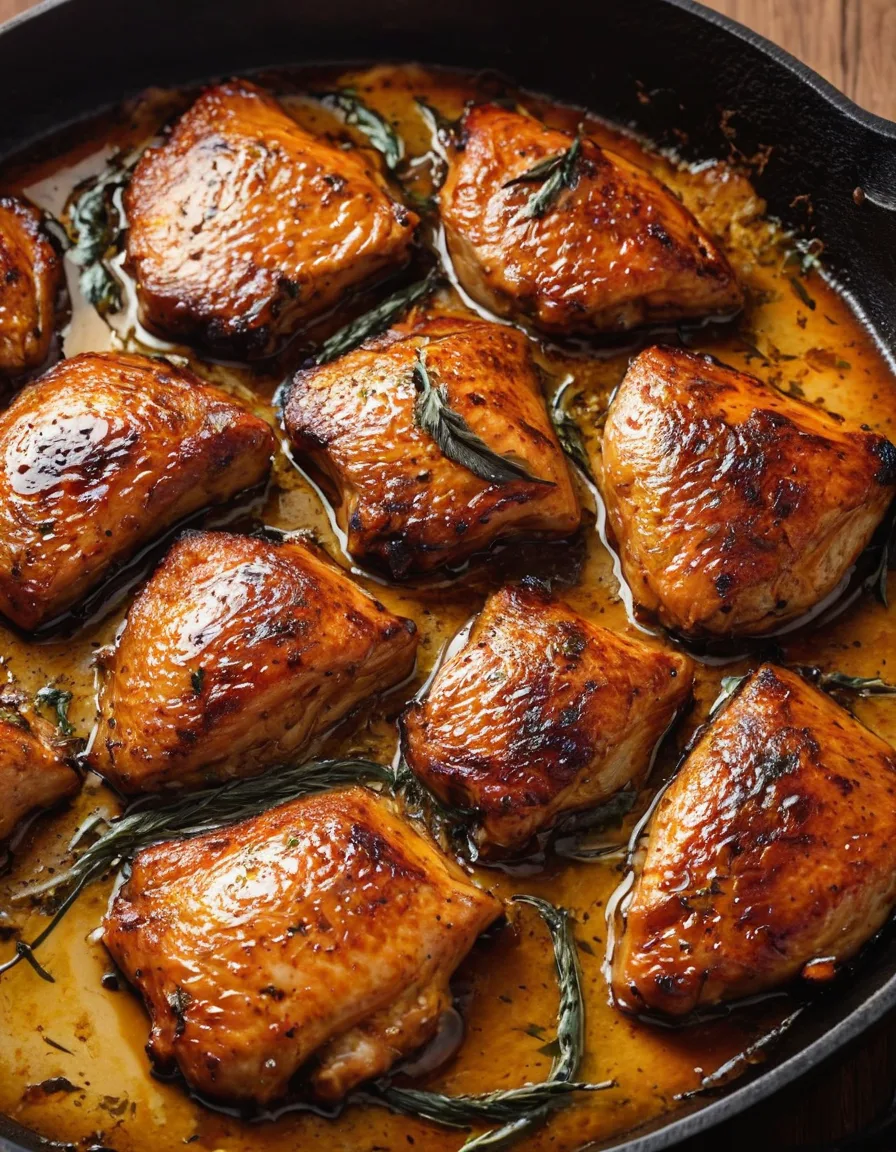
Crisp-skinned chicken thighs in a one-pan reduction of apple cider, shallot, and sage - fall in a skillet.
Ingredients · 4 servings
| 8 | bone-in, skin-on chicken thighs |
| 1 tsp | kosher salt · pantry |
| 0.5 tsp | black pepper · pantry |
| 1 tbsp | olive oil · pantry |
| 2 tbsp | unsalted butter |
| 1 | shallot |
| 2 | apple, Honeycrisp or Gala |
| 1 cup | apple cider |
| 0.5 cup | chicken stock · pantry |
| 1 tbsp | apple cider vinegar · pantry |
| 6 | fresh sage leaves |
Method
- Season chicken thighs on both sides with salt and pepper.
- Heat olive oil in a large skillet over medium-high heat. Add chicken skin-side down and sear undisturbed for 7-8 minutes, until skin is deeply golden and rendered.
- Flip thighs and cook 5-6 minutes more, until an instant-read thermometer reads 165°F / 74°C. Transfer chicken to a plate, leaving fond and fat in the pan.
- Pour off all but about 1 tablespoon of fat. Add shallot and apple wedges to the pan and cook over medium heat for 3-4 minutes, stirring occasionally, until shallot softens and apples start to color.
- Pour in apple cider and chicken stock, scraping up any browned bits from the pan bottom. Simmer 6-8 minutes, until liquid reduces by about half and apples are tender.
- Stir in vinegar and butter until the sauce turns glossy and slightly thickened. Off heat, stir in sage.
- Return chicken to the pan, skin-side up, and spoon sauce and apples over top. Serve immediately.
Nutrition · per serving
Estimated from this recipe's ingredients, not lab-measured — not a substitute for professional dietary advice.
Advertisement
The Why · No Anecdotes
The science, not a story about my childhood.
Why sear skin-side down for so long before flipping?
Chicken skin is mostly fat and connective tissue. Slow, sustained contact with a hot pan renders that fat and lets collagen convert to gelatin, which is what makes the skin crisp instead of rubbery. Flipping too early stops that process and leaves pale, chewy skin.
Why deglaze with cider instead of just stock?
The browned proteins and sugars stuck to the pan (fond) are concentrated flavor that plain stock alone won't fully lift. Cider's acidity and sugar dissolve the fond while adding its own reducible sweetness, giving the sauce more depth than stock alone.
Why add butter at the end instead of at the start?
Butter added late and off high heat stays emulsified as tiny fat droplets suspended in the liquid, which is what gives a pan sauce its glossy, coating texture. Melted in too early or over high heat, it separates into a greasy layer instead.
Suggested sides — swap freely