Entrée
Sheet-Pan Roasted Butternut Squash and Chickpeas, Whipped Feta and Crispy Sage
Caramelized squash and crisped chickpeas over whipped feta, finished with brown-butter sage.
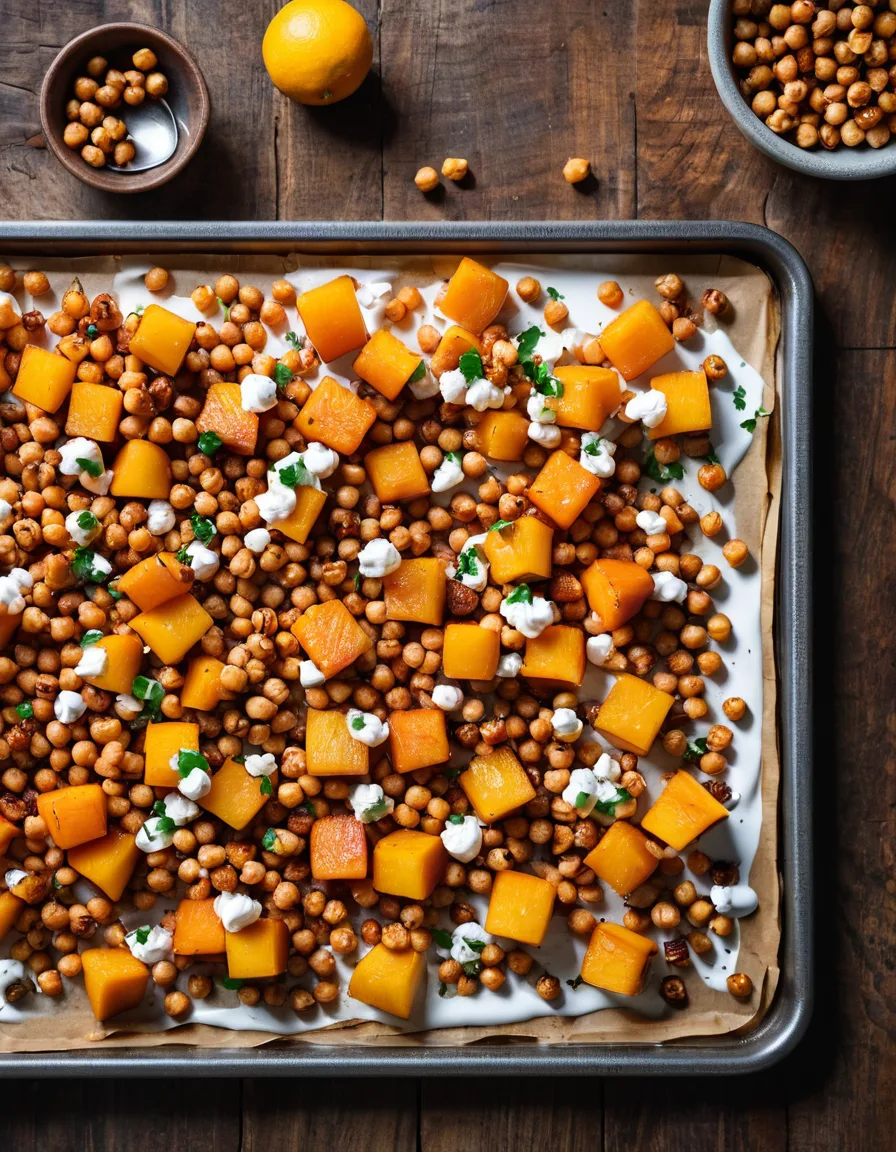
Ingredients · 4 servings
| 1.5 lbs | butternut squash |
| 1 15 oz can | canned chickpeas · pantry |
| 5 tbsp | olive oil · pantry |
| 1 clove | garlic grow it ↗ |
| 12 leaves | fresh sage leaves grow it ↗ |
| 3 tbsp | unsalted butter · pantry |
| 6 oz | feta cheese |
| 0.5 cup | plain Greek yogurt |
| 1 | lemon |
| 0.5 tsp | crushed red pepper flakes · pantry |
| 1 tsp | kosher salt · pantry |
| 0.5 tsp | black pepper · pantry |
Method
- Heat oven to 425°F. On a sheet pan, toss the squash and chickpeas with 3 tablespoons olive oil, salt, pepper, and red pepper flakes. Spread in a single layer.
- Roast 25-30 minutes, stirring once halfway, until squash is tender and browned at the edges and chickpeas are crisped.
- Meanwhile, in a food processor or with a fork, whip the feta, yogurt, remaining 2 tablespoons olive oil, lemon zest, and 1 tablespoon lemon juice until mostly smooth and light. Spread onto a serving platter or divide among plates.
- In a small skillet over medium heat, melt the butter. Add the garlic and sage leaves and cook 1-2 minutes, swirling, until the butter smells nutty and turns golden brown and the sage is crisp. Remove from heat immediately.
- Spoon the roasted squash and chickpeas over the whipped feta. Drizzle with the brown butter and sage, finish with a squeeze of remaining lemon juice, and serve.
Nutrition · per serving
Estimated from this recipe's ingredients, not lab-measured — not a substitute for professional dietary advice.
Advertisement
The Why · No Anecdotes
The science, not a story about my childhood.
Why roast the chickpeas alongside the squash instead of adding them raw to a salad?
Canned chickpeas carry a lot of surface moisture. Patting them dry and roasting at high heat drives off water so the exterior starch can dehydrate and crisp instead of steam, giving a crunchy shell around a creamy interior — the same principle that makes dry-patted meat sear instead of gray.
What's actually happening when you brown butter?
Butter is roughly 80% fat, 15% water, and 5% milk solids. Once the water boils off, the temperature climbs past 212°F and the milk proteins and sugars undergo Maillard browning, producing the nutty aroma compounds that plain melted butter never develops.
Why whip the feta instead of just crumbling it on top?
Feta is dense and salty with a crumbly protein structure. Blending it with yogurt and olive oil breaks that structure down and traps air and fat into a smooth emulsion, so the same cheese tastes rounder and coats a spoon instead of sitting in dry clumps.
Suggested sides — swap freely