Entrée
Skillet Butternut Squash Risotto, Crispy Sage
Creamy stovetop risotto built from caramelized squash, toasted rice and one pot of patience.
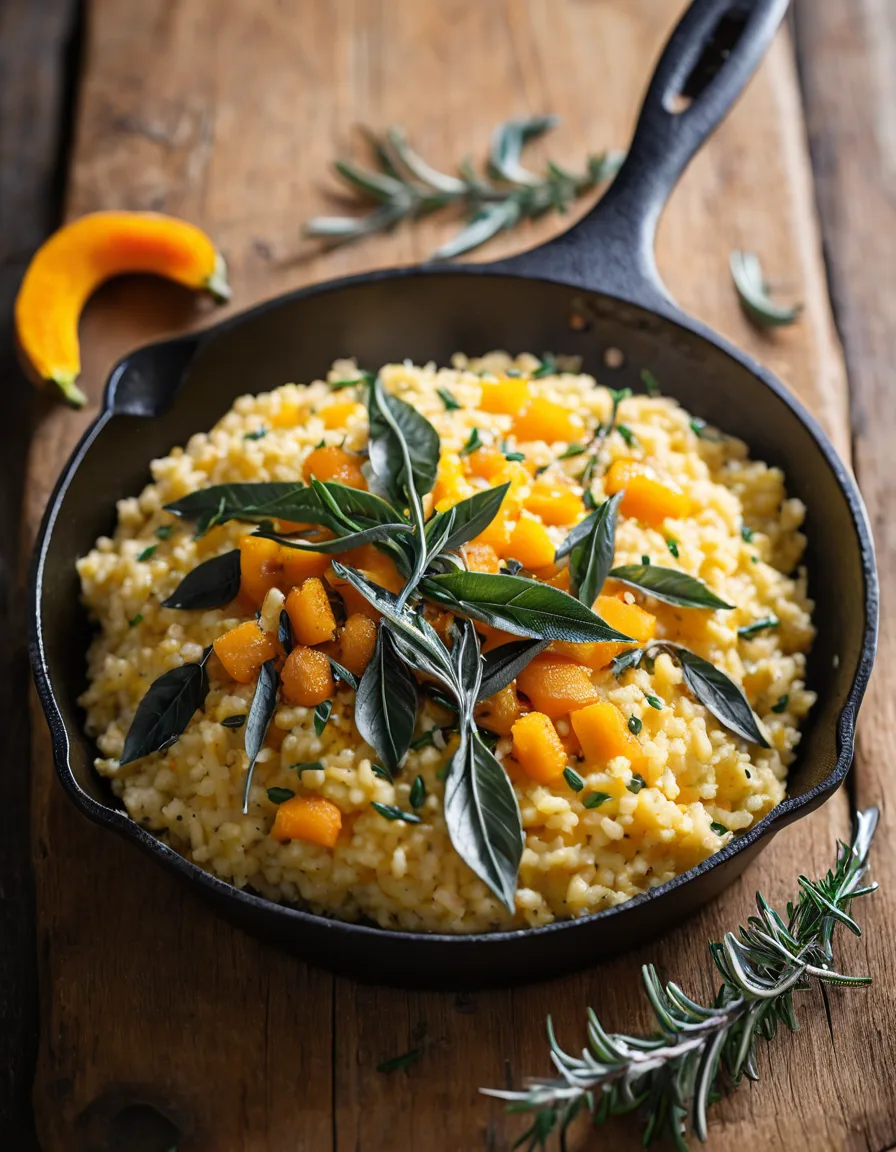
Ingredients · 4 servings
| 3 cup | butternut squash |
| 1.5 cup | arborio rice · pantry |
| 5 cup | vegetable stock · pantry |
| 1 | yellow onion |
| 2 clove | garlic grow it ↗ |
| 4 tbsp | unsalted butter · pantry |
| 0.5 cup | dry white wine |
| 0.75 cup | parmesan cheese |
| 12 | fresh sage leaves grow it ↗ |
| 1.5 tsp | kosher salt · pantry |
| 0.5 tsp | black pepper · pantry |
| 1 tbsp | olive oil · pantry |
Method
- Heat olive oil in a large deep skillet over medium-high. Add diced squash and a pinch of salt; cook, stirring occasionally, until browned at the edges and tender, 8-10 minutes. Transfer to a bowl and set aside.
- In the same skillet, melt 2 tablespoons butter over medium heat. Add onion and cook until soft and translucent, about 4 minutes. Add garlic and cook 30 seconds until fragrant.
- Add arborio rice and toast, stirring constantly, until the edges turn translucent and the pan smells nutty, about 2 minutes.
- Pour in white wine and stir until fully absorbed, scraping up any browned bits.
- Add warm stock one ladleful at a time, stirring frequently and waiting until each addition is mostly absorbed before adding the next. Continue for 18-20 minutes until rice is creamy and just tender with a slight bite.
- Stir the browned squash back into the risotto along with parmesan, remaining 2 tablespoons butter, salt, and pepper. Remove from heat.
- Wipe out a small corner of the skillet or use a separate small pan: melt a touch of butter over medium heat, add sage leaves, and fry 30-45 seconds per side until crisp and darkened. Transfer to a paper towel.
- Divide risotto among bowls and top with crispy sage leaves.
Nutrition · per serving
Estimated from this recipe's ingredients, not lab-measured — not a substitute for professional dietary advice.
Advertisement
The Why · No Anecdotes
The science, not a story about my childhood.
Why add the stock gradually instead of all at once?
Arborio rice is high in amylopectin starch, which releases slowly as grains rub against each other while stirring. Adding liquid in small increments forces constant agitation, pulling starch into the surrounding liquid to build a creamy emulsion without needing cream.
Why toast the rice in butter before adding liquid?
Toasting briefly seals the surface of each grain, slowing water penetration so the rice cooks more evenly and holds a firm center (the classic al dente bite) instead of turning mushy.
Why does frying sage make it crisp instead of wilted?
Sage leaves are mostly water held in thin-walled cells. Hot fat rapidly evaporates that water, collapsing the cell structure into a brittle, crisp texture while concentrating the leaf's aromatic oils.
Suggested sides — swap freely