Entrée
Thai Red Curry Shrimp
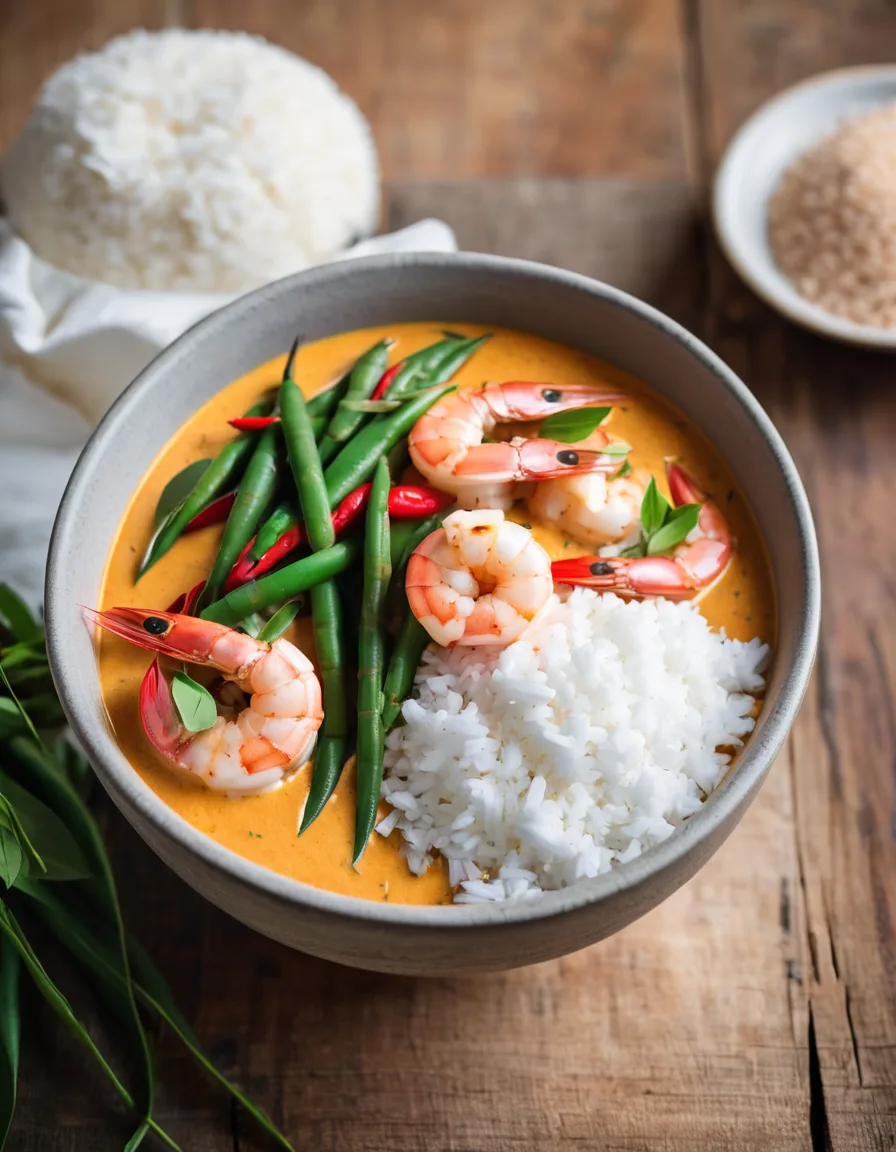
Shrimp, green beans, and red pepper in a coconut red curry that starts by frying the paste and ends with lime and basil.
Ingredients · 4 servings
| 1.5 cups | jasmine rice · pantry |
| 1 13.5-oz can | full-fat coconut milk |
| 3 tbsp | red curry paste |
| 1 tbsp | ginger grow it ↗ |
| 2 cloves | garlic grow it ↗ |
| 8 oz | green beans grow it ↗ |
| 1 whole | red bell pepper grow it ↗ |
| 1 tbsp | fish sauce |
| 2 tsp | brown sugar · pantry |
| 1.25 lb | large shrimp |
| 1 whole | lime |
| 0.5 cup | basil grow it ↗ |
Method
- Start the rice according to the package.
- Spoon the thick cream from the top of the coconut milk can (about 1/3 cup) into a large, deep skillet over medium heat. Add the curry paste and cook 2-3 minutes, stirring and mashing, until it darkens and beads of red oil appear at the edges.
- Stir in the ginger and garlic for 30 seconds. Add the rest of the coconut milk, 1/2 cup water, the fish sauce, and sugar and bring to a simmer.
- Add the green beans and bell pepper and simmer 5-6 minutes, until the beans are just tender.
- Add the shrimp and simmer 2-3 minutes, turning once, until pink, opaque, and curled into a loose C.
- Off the heat, stir in the lime juice and basil. Taste and adjust with more fish sauce or lime. Serve over the rice.
Nutrition · per serving
Estimated from this recipe's ingredients, not lab-measured — not a substitute for professional dietary advice.
Advertisement
The Why · No Anecdotes
The science, not a story about my childhood.
Why fry the curry paste in coconut cream first?
Most of the aroma compounds in the chilies, lemongrass, and spices dissolve in fat, not water. Cooking the paste in the fatty cream until the oil separates pulls those compounds into the oil, which then carries them through the whole sauce. Paste stirred straight into the liquid tastes raw and flat.
Why add the shrimp last?
Shrimp muscle fibers are short and have little connective tissue, so they cook through in two or three minutes. Past that point the proteins keep tightening and squeeze out moisture, and the shrimp turn rubbery. A loose C shape means done; a tight O means overdone.
Why season with lime and fish sauce at the end?
Coconut milk is rich and slightly sweet, and it needs both salt and acid to balance it. Lime juice loses its fresh aroma when boiled, so it goes in off the heat. Tasting then lets you correct the last two things a curry is usually missing: saltiness and sourness.
Suggested sides — swap freely