Entrée
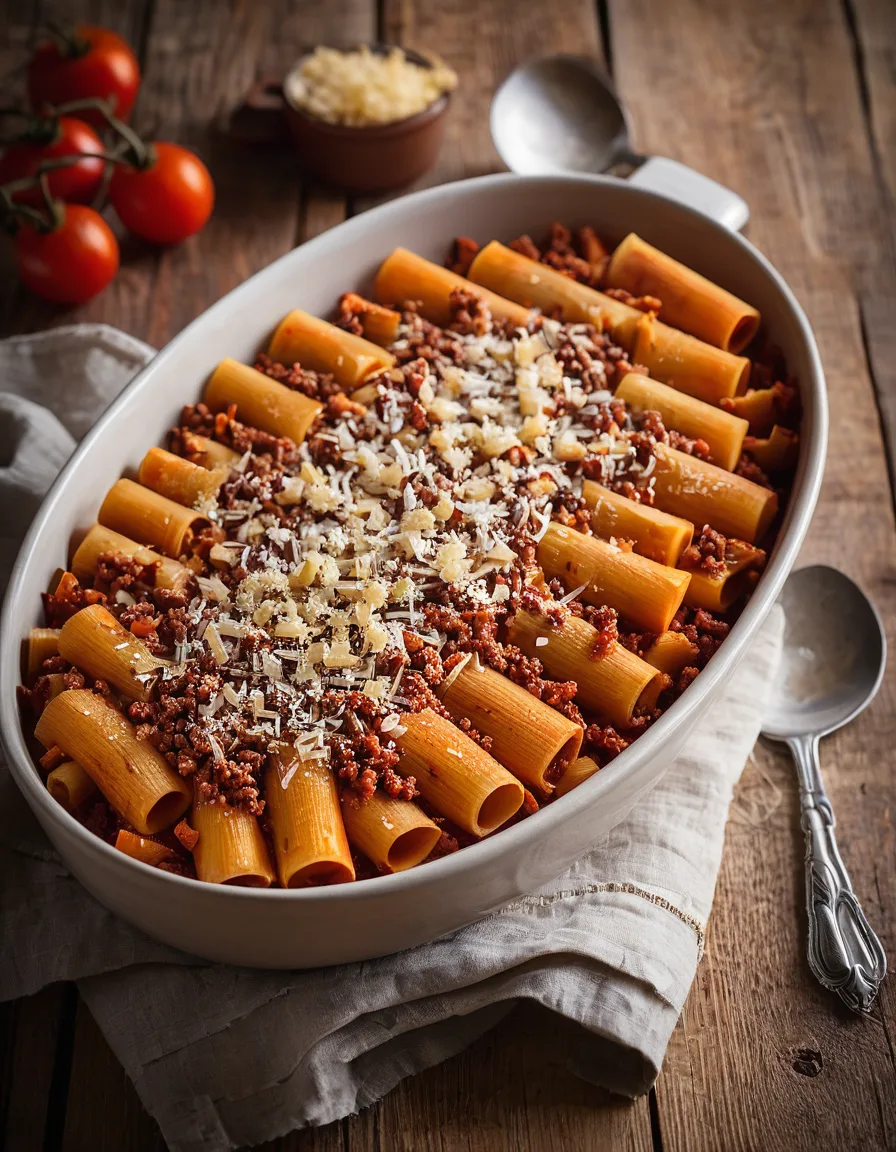
Weeknight Beef Ragù with Rigatoni
A thirty-minute simmer that borrows from Bolognese — browned beef, soffritto, red wine, and a splash of milk — tossed with rigatoni.
Ingredients · 6 servings
| 1 lb | ground beef, 85% lean |
| 1 tbsp | olive oil · pantry |
| 1 whole | yellow onion |
| 1 whole | carrot grow it ↗ |
| 1 stalk | celery |
| 1 tsp | kosher salt · pantry |
| 3 cloves | garlic grow it ↗ |
| 3 tbsp | tomato paste · pantry |
| 0.5 cup | dry red wine |
| 1 28-oz can | crushed tomatoes |
| 0.5 cup | whole milk |
| 1 whole | bay leaf · pantry |
| 1 lb | rigatoni |
| 0.5 cup | Parmesan |
Method
- Heat the oil in a Dutch oven over medium-high heat. Add the beef, press it into a single layer, and cook undisturbed 4 minutes. Break it up and cook until no pink remains and it reads at least 160°F / 71°C.
- Add the onion, carrot, celery, and salt and cook 6 minutes, until soft. Stir in the garlic and tomato paste and cook 2 minutes, until the paste darkens.
- Pour in the wine and simmer until nearly dry, scraping the bottom of the pot.
- Add the tomatoes, milk, and bay leaf. Partially cover and simmer over low heat 30 minutes, stirring occasionally.
- Meanwhile, boil the rigatoni in well-salted water until 2 minutes short of the package time. Reserve 1 cup of the cooking water and drain.
- Discard the bay leaf. Add the rigatoni to the sauce with a splash of the reserved water and cook 2 minutes, stirring, until the sauce coats the pasta. Serve with the Parmesan.
Nutrition · per serving
Estimated from this recipe's ingredients, not lab-measured — not a substitute for professional dietary advice.
Advertisement
The Why · No Anecdotes
The science, not a story about my childhood.
Why is there milk in a tomato sauce?
It is the classic Bolognese move. Milk fat and proteins soften the acidity of the wine and tomatoes, and the meat ends up more tender and the sauce rounder. It cooks in completely, so the ragù does not taste creamy.
Why finish the pasta in the sauce?
Pasta that is slightly underdone keeps absorbing liquid, so it takes on sauce instead of plain water. The starchy cooking water helps the fat and tomato liquid bind into one glossy coating instead of separating on the plate.
Why dice the vegetables so small?
Finely diced onion, carrot, and celery soften and nearly dissolve in a short simmer, adding sweetness and body without leaving visible chunks. Larger pieces would still be firm at thirty minutes.
Suggested sides — swap freely