Entrée
Weeknight Butter Chicken
Yogurt-marinated chicken thighs browned in butter, then simmered in a spiced tomato-cream sauce. Fifteen-minute marinade.
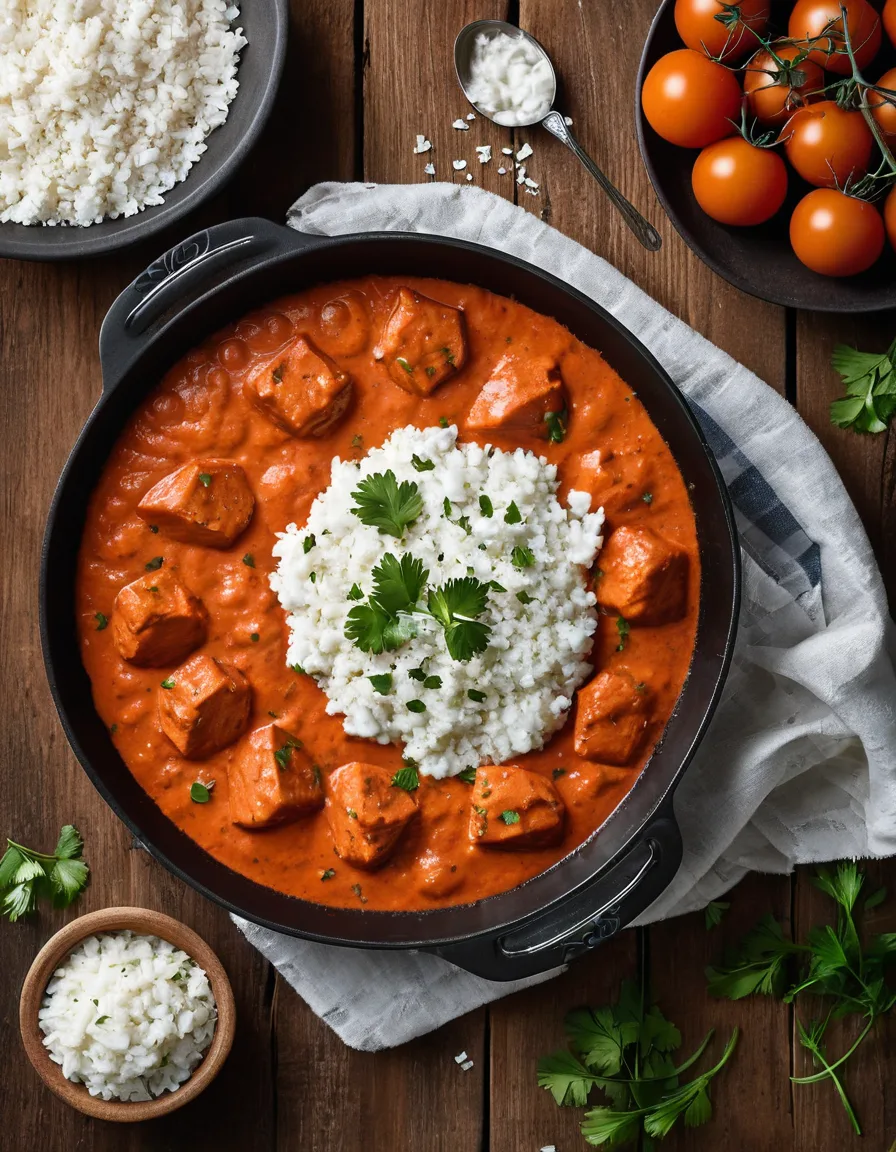
Ingredients · 4 servings
| 1.5 lb | boneless, skinless chicken thighs |
| 0.5 cup | plain whole-milk yogurt |
| 1 tbsp | garam masala |
| 1 tsp | ground cumin · pantry |
| 0.5 tsp | ground turmeric · pantry |
| 0.25 tsp | cayenne pepper · pantry |
| 1.25 tsp | kosher salt · pantry |
| 3 tbsp | unsalted butter |
| 1 small | yellow onion |
| 1 tbsp | ginger grow it ↗ |
| 4 cloves | garlic grow it ↗ |
| 1 15-oz can | crushed tomatoes |
| 1 tsp | sugar · pantry |
| 0.5 cup | heavy cream |
| 1.5 cups | basmati rice · pantry |
| 0.25 cup | cilantro grow it ↗ |
Method
- Toss the chicken with the yogurt, half of the garam masala, the cumin, turmeric, cayenne, and salt. Marinate 15 minutes at room temperature, or up to 8 hours refrigerated. Start the rice according to the package.
- Melt 1 tablespoon of the butter in a large skillet over medium-high heat. Shake the excess marinade off the chicken and brown it in a single layer, 3 minutes per side. Transfer to a plate; it will not be cooked through.
- Reduce the heat to medium and melt the remaining butter. Cook the onion 5 minutes, until soft. Add the ginger, garlic, and remaining garam masala and stir 45 seconds.
- Add the tomatoes and sugar and simmer 8 minutes, stirring, until thick and the butter separates at the edges.
- Stir in the cream, return the chicken and its juices, and simmer 6-8 minutes, until the chicken reads at least 165°F / 74°C.
- Top with cilantro and serve over the rice.
Nutrition · per serving
Estimated from this recipe's ingredients, not lab-measured — not a substitute for professional dietary advice.
Advertisement
The Why · No Anecdotes
The science, not a story about my childhood.
What does a yogurt marinade do that a vinegar one does not?
Yogurt is only mildly acidic, so it loosens the surface proteins of the meat without tightening them into the chalky texture a strong acid causes. Its milk sugars and proteins also brown fast in the pan, which is where the dark, savory spots come from.
Why wait for the fat to separate from the tomatoes?
Fat and water stay mixed while there is plenty of water in the pan. When enough has evaporated, the butter pools at the edges. That is a visible sign the tomatoes have concentrated and their harsh raw acidity has cooked off.
Why add sugar to a savory sauce?
Canned tomatoes are noticeably acidic. A teaspoon of sugar does not make the sauce sweet; it offsets the sourness so the spices and cream come forward. Restaurant versions do the same thing, usually with more.
Suggested sides — swap freely