Entrée
Coconut-Lime Chickpea Rice
The one-pot coconut-lime bowl, chickpea version — same toasted-coconut edges, same bright citrus finish.
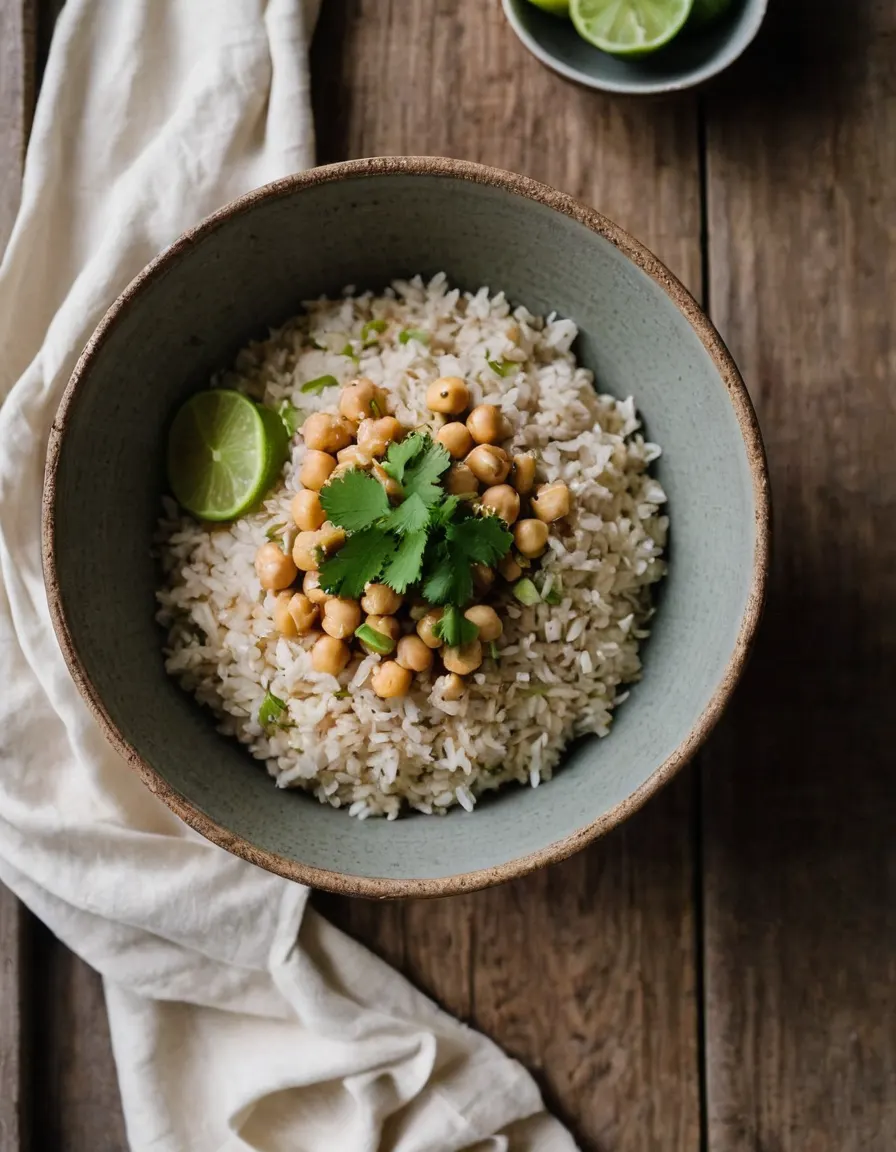
Ingredients · 4 servings
| 2 15-oz cans | chickpeas |
| 1.5 cup | jasmine rice · pantry |
| 1 can | coconut milk |
| 2 whole | lime |
| 0.5 bunch | scallions grow it ↗ |
| 0.5 bunch | cilantro grow it ↗ |
| 0.25 cup | unsweetened shredded coconut |
| 2 cloves | garlic grow it ↗ |
| olive oil · pantry | |
| kosher salt · pantry |
Method
- Toast rice and shredded coconut in oil in a pot until fragrant and golden, 2-3 min.
- Add garlic, coconut milk, a can of water, and the drained chickpeas; bring to a simmer, cover, cook 18 min.
- Rest off heat 5 min. Fluff, then finish with lime juice, scallions, and cilantro.
Nutrition · per serving
Estimated from this recipe's ingredients, not lab-measured — not a substitute for professional dietary advice.
Advertisement
The Why · No Anecdotes
The science, not a story about my childhood.
Why toast the rice and coconut before adding liquid?
Dry heat browns the starches and the coconut's own oil (Maillard again), building nutty, toasted flavor that simmering alone never develops. It also coats each grain in fat, keeping them separate so the rice turns out fluffy instead of gluey.
Why simmer the chickpeas in with the rice instead of pan-frying them crisp first?
Canned chickpeas are already cooked — here they're along for flavor and protein, not crunch, so simmering them in the coconut milk lets them soak up the sauce instead of staying separate. If it's crunch you want, that's the taco version, not this one.
Why let the rice sit before fluffing?
When the simmer ends, the outer grains are cooked but moisture is unevenly distributed through the pot. A five-minute covered rest lets trapped steam finish the job and even out, so fluffing doesn't tear half-done grains into a sticky mess.
Suggested sides — swap freely