Entrée
Crispy Skillet Chicken Thighs, Summer Peperonata
Bone-in thighs rendered fully crispy, then simmered in a sweet-sharp pepper and tomato pan sauce — one skillet, start to finish.
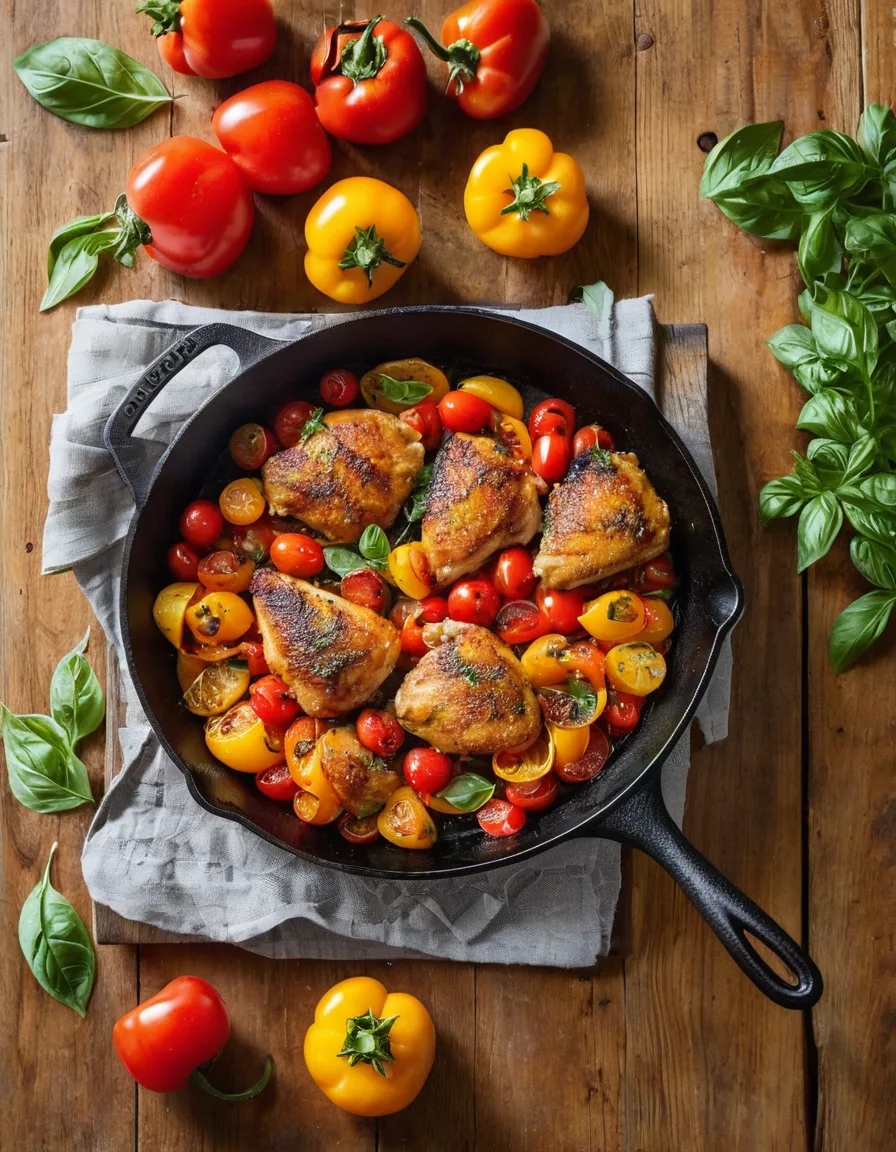
Ingredients · 4 servings
| 4 | bone-in, skin-on chicken thighs |
| 3 | bell peppers grow it ↗ |
| 1 | red onion |
| 3 clove | garlic grow it ↗ |
| 2 cup | cherry tomatoes grow it ↗ |
| 2 tbsp | balsamic vinegar · pantry |
| 1 tbsp | olive oil · pantry |
| 0.25 cup | basil grow it ↗ |
| 1 tsp | salt · pantry |
| 0.5 tsp | black pepper · pantry |
Method
- Pat chicken thighs completely dry and season both sides with salt and pepper.
- Add olive oil to a cold or barely-warm large skillet, then place chicken skin-side down. Set heat to medium and let it render slowly, undisturbed, 10-12 minutes, until the skin is deep golden and mostly crisp.
- Flip and cook 6-8 minutes more, until an instant-read thermometer hits 165°F / 74°C at the thickest part. Transfer chicken to a plate; leave the fat in the skillet.
- Add onion and peppers to the skillet, season lightly with salt, and cook over medium 5-6 minutes, stirring occasionally, until softened and lightly browned.
- Add garlic and cook 30 seconds until fragrant.
- Add cherry tomatoes and cook 4-5 minutes, pressing a few to help them break down and release juice.
- Pour in balsamic vinegar, scraping up the browned fond on the skillet bottom, and simmer 2 minutes until the sauce thickens slightly.
- Nestle the chicken back into the skillet, spoon peperonata over the top, and finish with torn basil before serving.
Nutrition · per serving
Estimated from this recipe's ingredients, not lab-measured — not a substitute for professional dietary advice.
Advertisement
The Why · No Anecdotes
The science, not a story about my childhood.
Why start chicken skin in a cold or barely-warm pan instead of a hot one?
Chicken skin is mostly fat and connective tissue. A slow, gradual rise in heat lets the fat render out steadily and the collagen convert, so the skin dehydrates and crisps evenly. Hitting it with high heat immediately seizes the surface, traps moisture underneath, and leaves you with skin that's browned but rubbery.
What's actually happening when you deglaze with vinegar after searing?
The browned bits stuck to the pan (fond) are concentrated proteins and sugars from the Maillard reaction — intensely flavorful but insoluble in fat. Adding an acidic liquid like balsamic vinegar dissolves and lifts them back into the sauce, which is also why acid is added after browning, not before: too much acid too early can inhibit browning.
Suggested sides — swap freely