Entrée
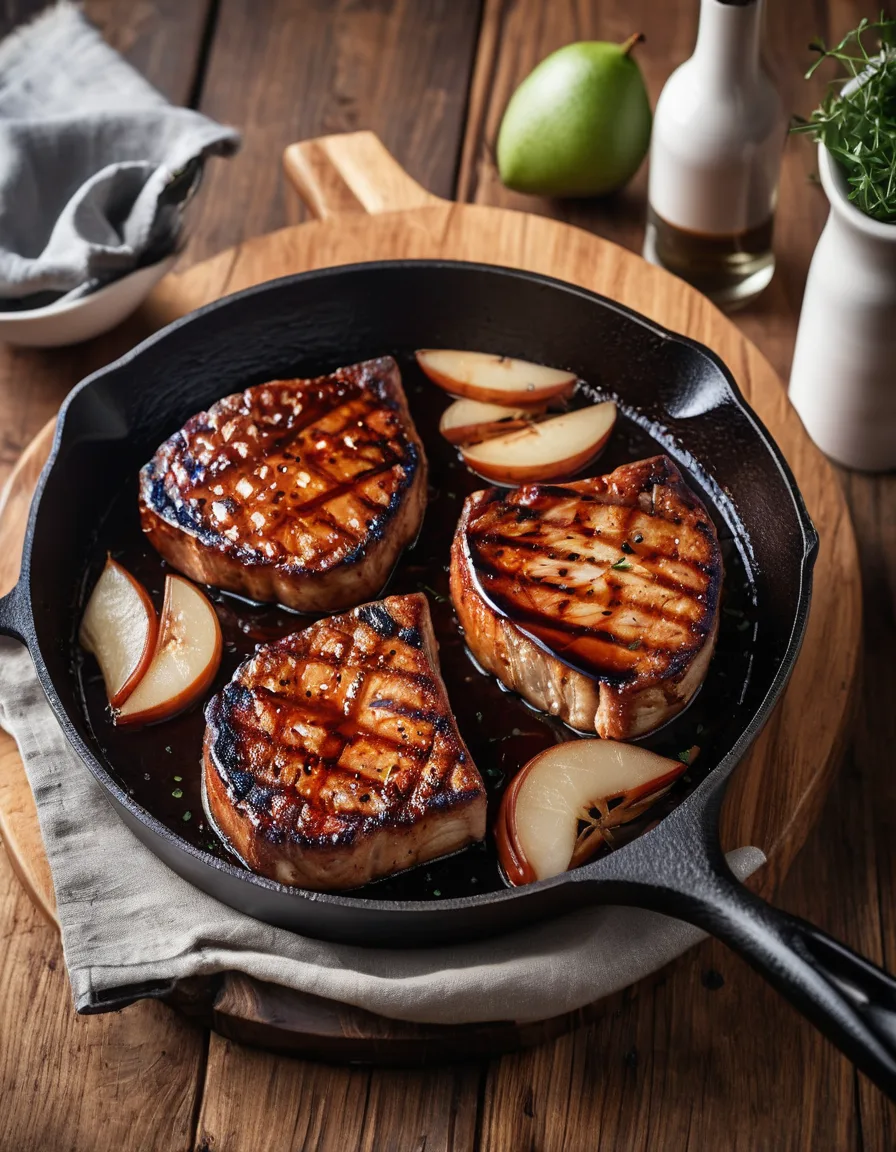
Seared Pork Chops, Pear-Sage Pan Sauce
Thick-cut pork chops seared hard, then finished with a butter-mounted pear and sage pan sauce in the same skillet.
Ingredients · 4 servings
| 4 chops | boneless pork chops (6 oz each) |
| 1 tsp | kosher salt · pantry |
| 0.5 tsp | black pepper · pantry |
| 1 tbsp | neutral oil · pantry |
| 3 tbsp | unsalted butter |
| 1 | shallot |
| 2 cloves | garlic grow it ↗ |
| 2 | firm pear (such as Bosc) |
| 8 leaves | fresh sage leaves grow it ↗ |
| 2 tbsp | apple cider vinegar · pantry |
| 0.5 cup | chicken stock · pantry |
Method
- Pat pork chops completely dry and season both sides with salt and pepper.
- Heat oil in a large skillet over high heat until shimmering. Sear chops 3 to 4 minutes per side, undisturbed, until deeply browned and internal temperature reaches 145°F. Transfer to a plate and tent loosely with foil to rest.
- Reduce heat to medium. Add 1 tablespoon butter, shallot, and garlic to the skillet; cook, stirring, until fragrant, about 1 minute.
- Add pear slices and cook, stirring occasionally, until lightly caramelized at the edges, about 3 minutes.
- Add sage and cook 30 seconds, then pour in vinegar and scrape up any browned bits from the bottom of the pan.
- Add chicken stock and simmer until reduced by half, about 3 minutes.
- Remove pan from heat and swirl in remaining 2 tablespoons butter until glossy and emulsified. Season sauce with salt to taste.
- Return chops and any accumulated juices to the pan, spoon sauce over top, and serve immediately.
Nutrition · per serving
Estimated from this recipe's ingredients, not lab-measured — not a substitute for professional dietary advice.
Advertisement
The Why · No Anecdotes
The science, not a story about my childhood.
Why does the sauce get finished off the heat instead of still simmering?
Butter is an emulsion of fat and water held together by milk proteins. High heat breaks that emulsion, separating the fat and leaving a greasy, thin liquid. Swirling cold butter into a sauce that's off direct heat lets the fat disperse into tiny droplets suspended in the liquid, producing a sauce that's thick, glossy, and coats a spoon instead of pooling around it.
Why does the pan sauce need vinegar before the stock goes in?
Deglazing with an acid first dissolves the browned fond (the Maillard-reaction proteins and sugars stuck to the pan) more aggressively than stock alone, because acid breaks down those protein bonds. The vinegar also brightens the sweetness of the caramelized pear, keeping the finished sauce from tasting flat or one-note.
Suggested sides — swap freely