Entrée
Skillet-Braised Chicken Thighs, Mushrooms and Thyme
Seared bone-in thighs braised in a mushroom-thyme pan sauce, finished glossy with butter. One skillet, fall comfort.
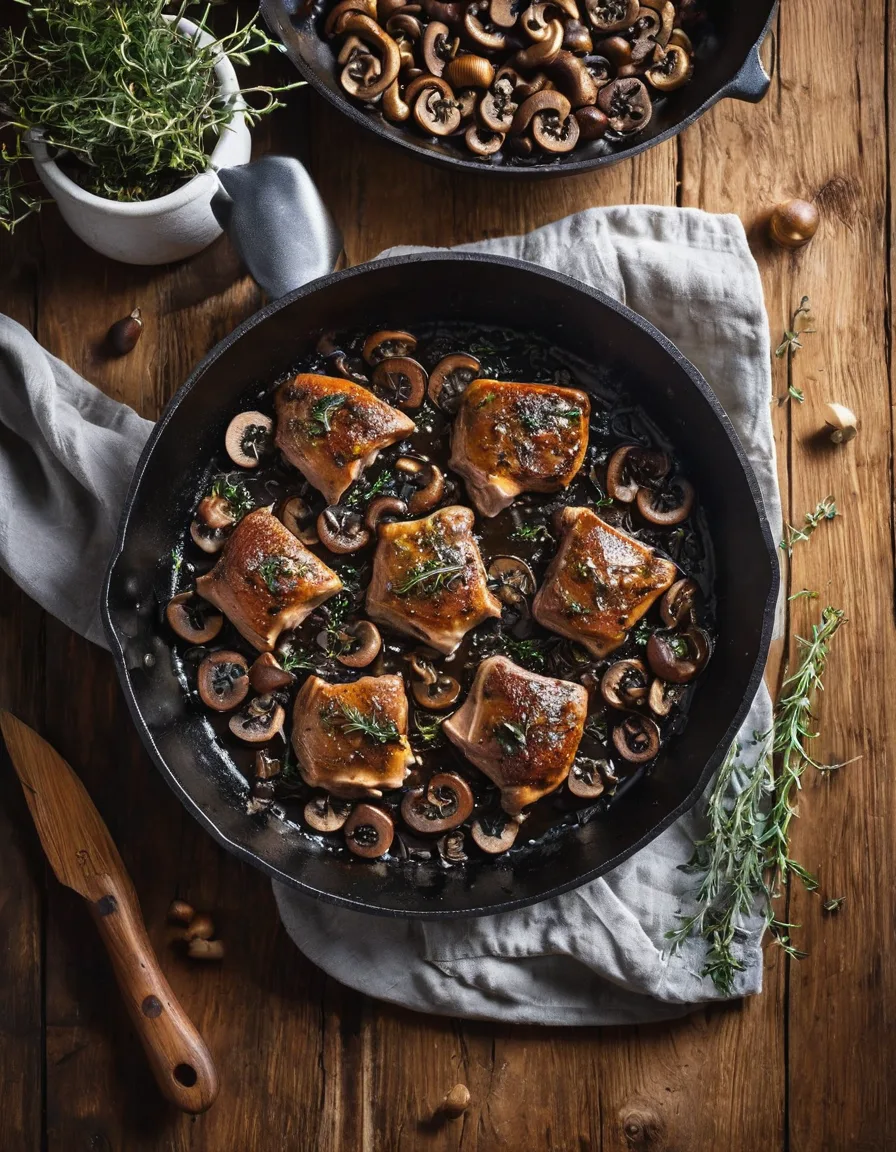
Ingredients · 4 servings
| 4 piece | bone-in, skin-on chicken thighs |
| 1 tsp | kosher salt · pantry |
| 0.5 tsp | black pepper · pantry |
| 1 tbsp | olive oil · pantry |
| 3 tbsp | unsalted butter · pantry |
| 8 oz | cremini mushrooms |
| 1 medium | shallot |
| 2 clove | garlic grow it ↗ |
| 4 sprig | fresh thyme |
| 0.5 cup | dry white wine |
| 1 cup | low-sodium chicken stock · pantry |
Method
- Pat chicken thighs dry and season all over with salt and pepper.
- Heat olive oil in a large skillet over medium-high heat. Sear chicken skin-side down until deeply golden and crisp, 6-7 minutes. Flip and sear 2 minutes more, then transfer to a plate.
- Pour off all but 1 tablespoon of fat from the skillet. Reduce heat to medium, add 1 tablespoon butter, the mushrooms, and shallot. Cook, stirring occasionally, until mushrooms release their liquid and brown, about 6 minutes.
- Add garlic and thyme sprigs, stir 30 seconds until fragrant.
- Pour in the white wine, scraping up the browned bits from the bottom of the pan. Simmer 2 minutes to cook off the raw alcohol smell.
- Add the chicken stock and nestle the chicken back in, skin-side up, with any accumulated juices. Reduce heat to a gentle simmer, cover partially, and cook until chicken reaches 165°F / 74°C, about 15 minutes.
- Transfer chicken to plates. Remove thyme stems. Increase heat to medium-high and reduce the sauce for 2-3 minutes until slightly thickened.
- Off heat, swirl in the remaining 2 tablespoons butter until glossy. Spoon sauce and mushrooms over chicken.
Nutrition · per serving
Estimated from this recipe's ingredients, not lab-measured — not a substitute for professional dietary advice.
Advertisement
The Why · No Anecdotes
The science, not a story about my childhood.
Why sear the chicken before braising it in liquid?
Searing drives the Maillard reaction, browning proteins and sugars on the skin into hundreds of new flavor compounds that no amount of simmering can create. That browned skin and fond (the stuck-on bits in the pan) become the backbone of the sauce once deglazed. Braising liquid alone only ever tastes of what's dissolved in it; building a fond first adds a whole separate layer of roasted flavor underneath.
Why does the sauce turn glossy when butter is added off heat?
Cold butter is an emulsion of fat and water held together by milk proteins. Swirled into a hot liquid off direct heat, it melts slowly enough for those fat globules to disperse into tiny droplets suspended in the sauce rather than separating into a greasy pool. That even distribution of fat is what scatters light and reads as glossy. Direct high heat would break the emulsion and the butter would just float.
Suggested sides — swap freely