Entrée
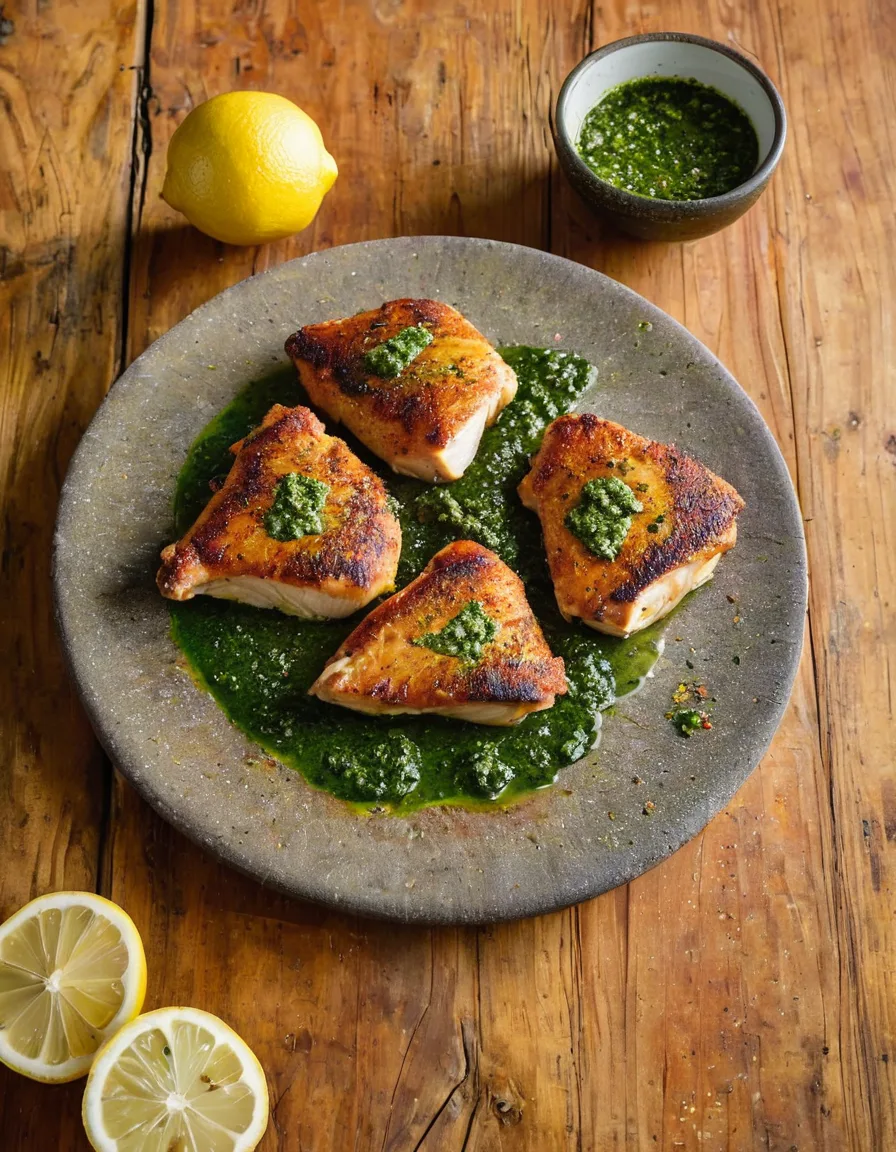
Skillet Chicken Thighs, Charred Lemon Chimichurri
Crispy-skinned seared thighs topped with a bright, garlicky chimichurri made while the chicken rests. One skillet, no simmering required.
Ingredients · 4 servings
| 8 | chicken thighs, bone-in, skin-on |
| 1 tsp | kosher salt · pantry |
| 0.5 tsp | black pepper · pantry |
| 0.33 cup | olive oil · pantry |
| 1 cup packed | flat-leaf parsley grow it ↗ |
| 3 cloves | garlic grow it ↗ |
| 3 tbsp | red wine vinegar · pantry |
| 2 | lemon |
| 0.5 tsp | red pepper flakes · pantry |
| 1 tsp | dried oregano · pantry |
Method
- Pat chicken thighs completely dry and season both sides with salt and pepper.
- Set a large skillet over medium heat with 1 tablespoon olive oil. Lay thighs skin-side down and don't move them — let the fat render slowly, 10-12 minutes, until the skin is deep golden and mostly crisp.
- Flip and cook 6-8 minutes more until the thickest part reads 165°F/74°C. Transfer to a plate to rest.
- Halve the lemons and place cut-side down in the same hot skillet for 2-3 minutes, until charred. Set aside.
- In a bowl, combine parsley, garlic, vinegar, remaining olive oil, red pepper flakes, and oregano. Season with salt; stir to combine — this is chimichurri, not a purée, so keep it loose and textured.
- Squeeze the charred lemon halves over the rested chicken, then spoon chimichurri generously over the top. Serve immediately.
Nutrition · per serving
Estimated from this recipe's ingredients, not lab-measured — not a substitute for professional dietary advice.
Advertisement
The Why · No Anecdotes
The science, not a story about my childhood.
Why cook the chicken skin-side down without moving it?
Chicken skin is mostly fat and collagen. Low, steady heat renders the fat slowly and lets moisture escape as steam, so the skin dehydrates and crisps instead of steaming soft. Moving it too early tears the skin before it releases from the pan on its own.
What does charring the lemon actually do?
Direct heat caramelizes the sugars in the lemon flesh (a Maillard/caramelization reaction) and drives off some of the sharpest volatile acids. The juice that comes out is sweeter and rounder, not just sour.
What temperature is chicken actually safe at?
165°F/74°C at the thickest part, measured with a thermometer. Color is not a reliable indicator — pink meat near the bone can still be safely cooked, and white meat can still be underdone.
Suggested sides — swap freely