Entrée
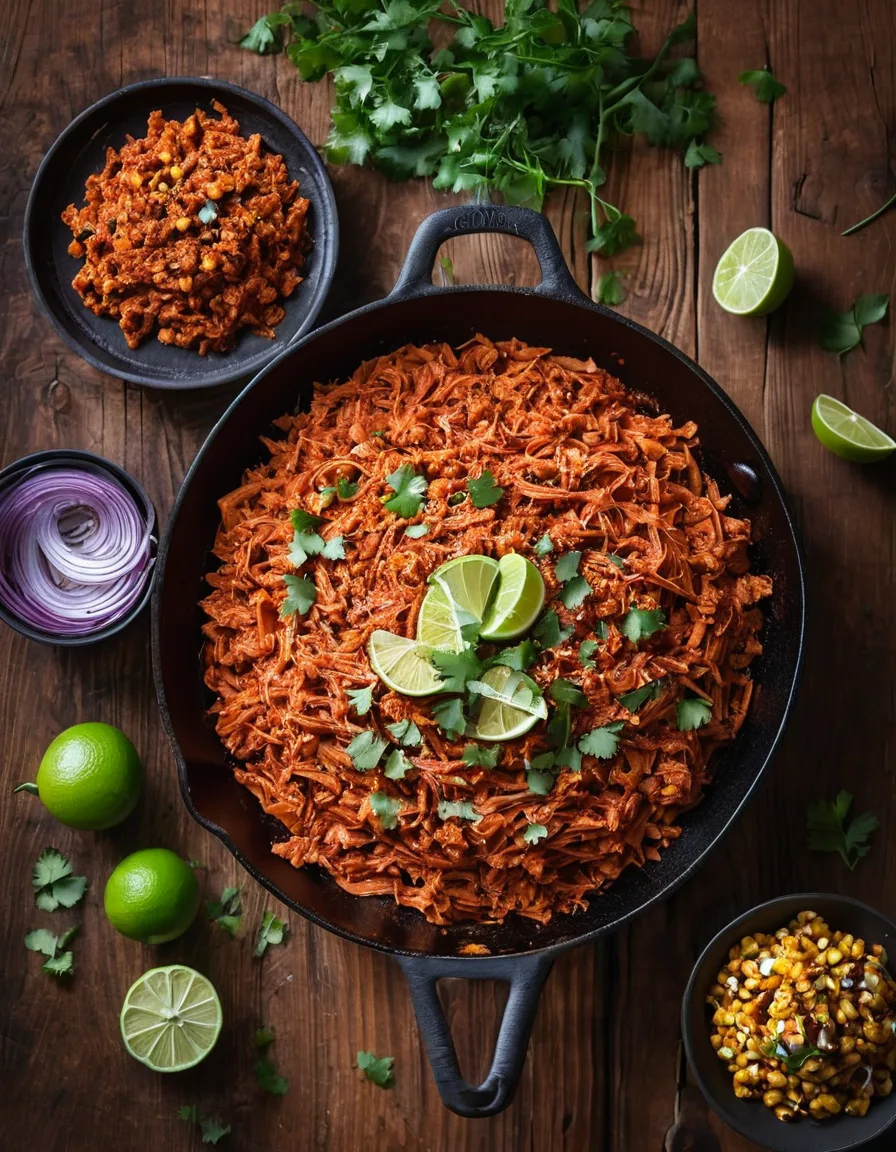
Skillet Chicken Tinga
Chicken thighs braised in chipotle and fire-roasted tomato, shredded in the pan, and reduced until the sauce clings.
Ingredients · 4 servings
| 1.5 lb | boneless, skinless chicken thighs |
| 0.75 tsp | kosher salt · pantry |
| 1 tbsp | neutral oil · pantry |
| 1 whole | white onion |
| 3 cloves | garlic grow it ↗ |
| 1 tsp | dried oregano · pantry |
| 0.5 tsp | ground cumin · pantry |
| 2 whole | chipotle peppers in adobo |
| 1 14.5-oz can | fire-roasted crushed tomatoes |
| 0.5 cup | chicken stock · pantry |
| 12 whole | corn tortillas |
| 1 whole | lime |
Method
- Season the chicken with the salt. Heat the oil in a large skillet over medium-high heat and sear the thighs 3 minutes per side, until browned. Transfer to a plate; they will not be cooked through.
- Add the onion to the same pan and cook 5 minutes, until soft and starting to color. Stir in the garlic, oregano, and cumin for 30 seconds.
- Add the chipotles with their sauce, the tomatoes, and the stock, scraping up the browned bits. Nestle the chicken back in, cover, and simmer over medium-low heat 15-18 minutes, until tender and an instant-read thermometer reads at least 165°F / 74°C.
- Shred the chicken in the pan with two forks. Simmer uncovered 3-5 minutes, stirring, until the sauce is thick and coats the meat.
- Warm the tortillas directly over a gas flame or wrapped in a damp towel in the microwave. Serve the tinga in the tortillas with lime.
Nutrition · per serving
Estimated from this recipe's ingredients, not lab-measured — not a substitute for professional dietary advice.
Advertisement
The Why · No Anecdotes
The science, not a story about my childhood.
Why thighs instead of breasts for shredding?
Thigh meat has more connective tissue and fat. During a covered simmer that collagen dissolves into gelatin, which is what makes the shreds feel moist even though the meat is cooked well past 165°F. Breast has almost none, so it dries into strings.
Why reduce the sauce after shredding rather than before?
Shredding multiplies the surface area of the meat many times over. Simmering at that point lets the sauce soak into every strand while the excess water cooks off, so the flavor ends up in the chicken instead of pooled around it.
Why sear first if the chicken is going to braise anyway?
Braising liquid never gets hotter than a simmer, which is too cool for browning. The quick sear builds roasted, savory flavor on the meat and leaves fond on the pan that dissolves into the sauce.
Suggested sides — swap freely