Entrée
Skillet-Roasted Chicken Thighs, Balsamic Grapes and Shallots
Crisp-skinned chicken thighs roasted with blistered grapes and shallots, finished with a balsamic pan sauce.
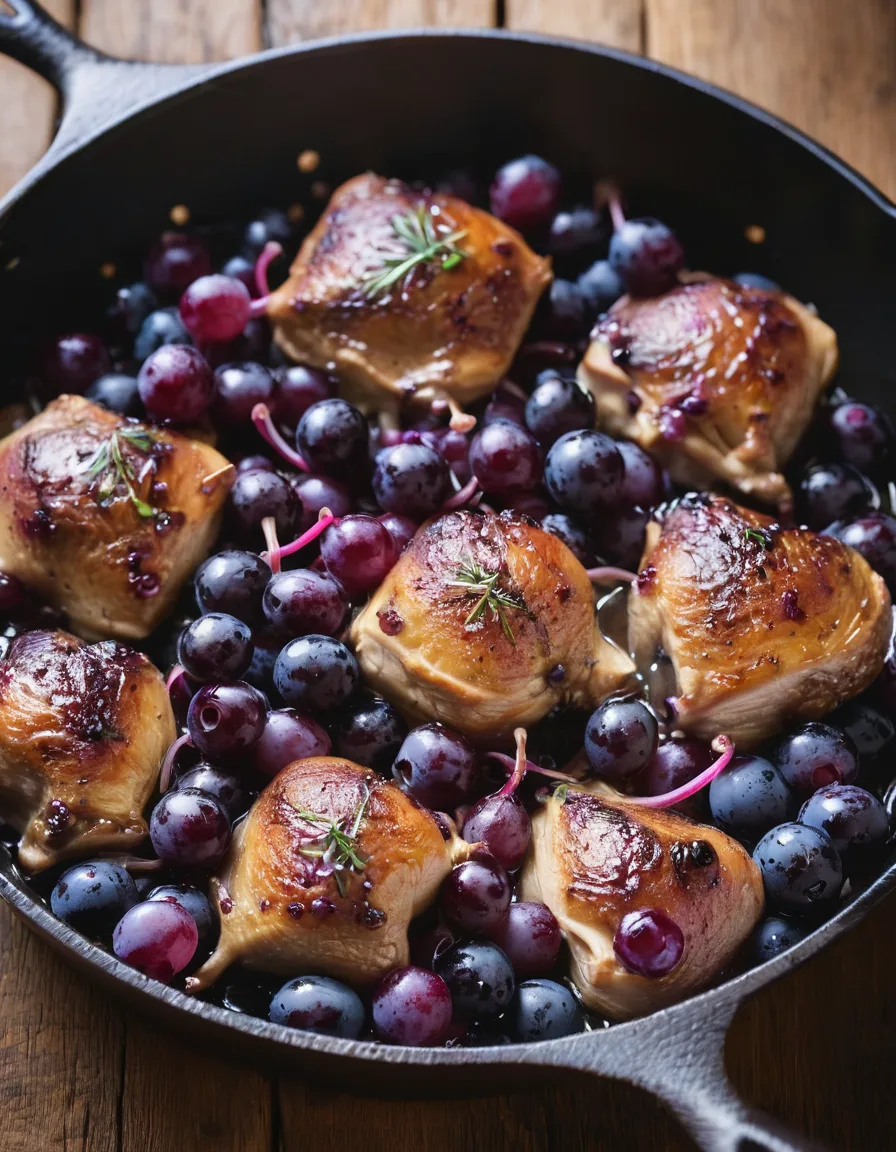
Ingredients · 4 servings
| 8 | bone-in, skin-on chicken thighs |
| 2 cup | red seedless grapes |
| 3 | shallots |
| 0.33 cup | balsamic vinegar · pantry |
| 0.5 cup | chicken stock · pantry |
| 4 sprig | fresh thyme grow it ↗ |
| 1 tbsp | olive oil · pantry |
| 1 tbsp | unsalted butter |
| 1.5 tsp | kosher salt · pantry |
| 0.5 tsp | black pepper · pantry |
Method
- Heat oven to 425°F (220°C). Pat chicken thighs dry and season all over with salt and pepper.
- Heat olive oil in a large oven-safe skillet over medium-high heat. Lay thighs skin-side down and sear undisturbed for 7-8 minutes until the skin is deep golden and releases easily from the pan.
- Flip thighs, then scatter the grapes and shallots around them in the skillet. Tuck in thyme sprigs.
- Transfer the skillet to the oven and roast for 18-20 minutes, until chicken reaches 165°F (74°C) and the grapes are blistered and juicy.
- Transfer chicken, grapes, and shallots to a platter. Set the skillet (handle is hot) over medium heat on the stovetop.
- Pour in balsamic vinegar and chicken stock, scraping up the browned bits with a wooden spoon. Simmer for 3-4 minutes until slightly syrupy.
- Remove from heat, swirl in the butter until glossy, and discard the thyme sprigs.
- Spoon the sauce and roasted grapes over the chicken and serve.
Nutrition · per serving
Estimated from this recipe's ingredients, not lab-measured — not a substitute for professional dietary advice.
Advertisement
The Why · No Anecdotes
The science, not a story about my childhood.
Why sear the chicken skin-side down before roasting instead of just roasting it raw?
Searing renders subcutaneous fat and drives the Maillard reaction across the skin's surface proteins and sugars, producing a browned, crisp texture and hundreds of new flavor compounds that roasting alone, at a gentler ambient heat, won't fully develop before the meat overcooks.
Why do the grapes turn sweet and jammy instead of staying tart?
Heat breaks down the grapes' cell walls and concentrates their sugars as water evaporates, while their natural acids soften the richness of the chicken fat and balsamic reduction — the same caramelization principle that makes roasted fruit taste sweeter than raw.
Why deglaze the skillet instead of starting the sauce in a clean pan?
The browned bits (fond) stuck to the pan are concentrated proteins and sugars from the seared chicken; dissolving them in vinegar and stock pulls that flavor directly into the sauce instead of leaving it scraped into the sink.
Suggested sides — swap freely