Entrée
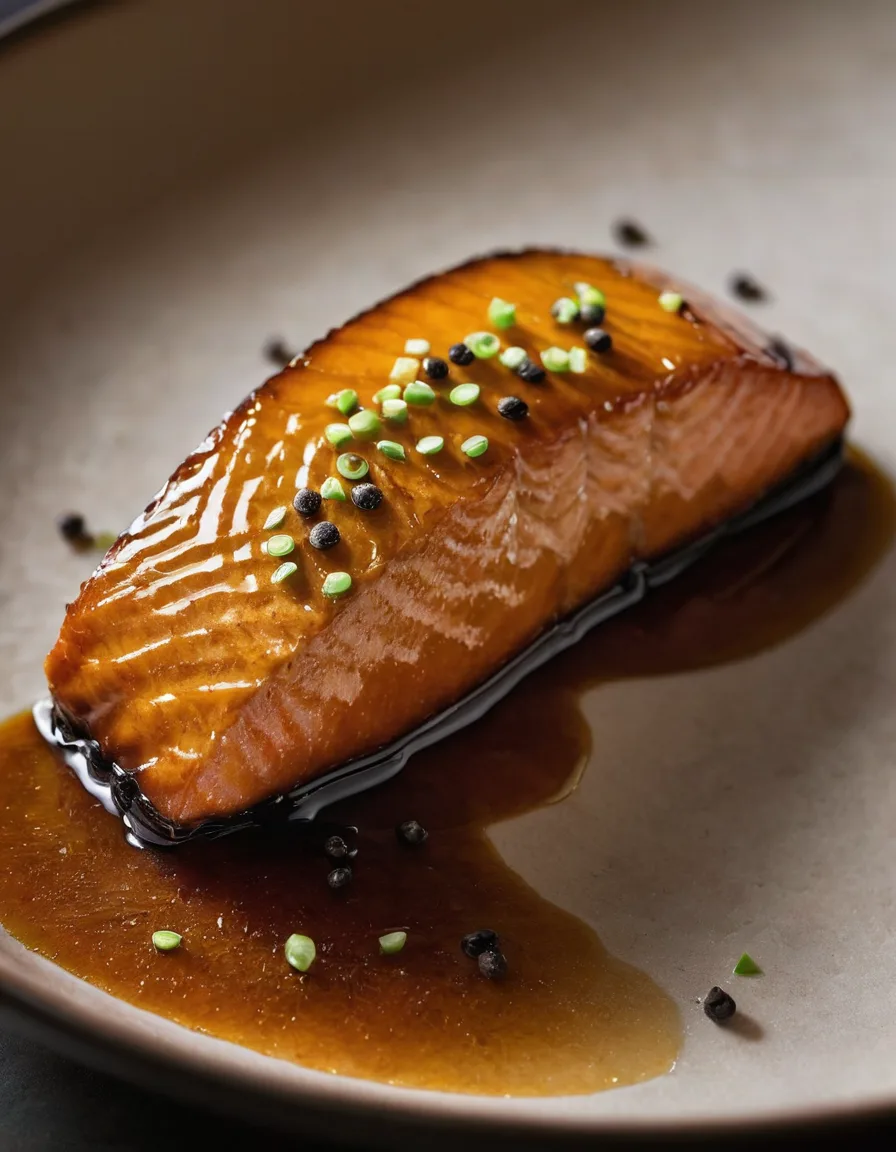
Broiled Miso-Glazed Salmon
Salmon broiled under a sweet-salty miso glaze until it caramelizes at the edges — ready in under half an hour.
Ingredients · 4 servings
| 4 fillets (6 oz each) | salmon fillets, skin-on |
| 3 tbsp | white miso paste |
| 2 tbsp | mirin |
| 2 tbsp | low-sodium soy sauce · pantry |
| 1 tbsp | brown sugar · pantry |
| 1 tsp | rice vinegar · pantry |
| 1 tbsp | neutral oil · pantry |
| 2 | scallions grow it ↗ |
| 1 tbsp | sesame seeds |
| 0.25 tsp | black pepper · pantry |
Method
- Set an oven rack 6 inches from the broiler element and preheat broiler to high. Line a sheet pan with foil and lightly oil it.
- Whisk miso, mirin, soy sauce, brown sugar, and rice vinegar in a small bowl until smooth.
- Pat salmon fillets dry, season with pepper, and arrange skin-side down on the sheet pan. Brush half the glaze over the tops; let sit 10 minutes.
- Broil salmon 6-8 minutes, watching closely, until the glaze bubbles and browns at the edges and the fish reaches 145°F and flakes easily.
- Brush on the remaining glaze in the last minute of cooking for a second glossy layer.
- Rest 2 minutes, then top with sliced scallions and toasted sesame seeds before serving.
Nutrition · per serving
Estimated from this recipe's ingredients, not lab-measured — not a substitute for professional dietary advice.
Advertisement
The Why · No Anecdotes
The science, not a story about my childhood.
Why does the miso glaze char instead of just melting?
Miso and brown sugar are packed with amino acids and reducing sugars. Under intense, direct broiler heat they undergo the Maillard reaction and caramelization simultaneously, browning in minutes without needing the fish itself to overcook.
How do you know the salmon is actually done, not just browned on top?
Color on the glaze tells you nothing about the interior. Check for an internal temperature of 145°F with a thermometer inserted at the thickest point, or press gently — the flesh should flake easily along its natural seams.
Suggested sides — swap freely