Entrée
Skillet-Braised Chicken Thighs, Fennel and White Wine
Crisp-skinned chicken thighs braised with fennel and white wine, finished with a mustard pan sauce. One pan, fall flavors.
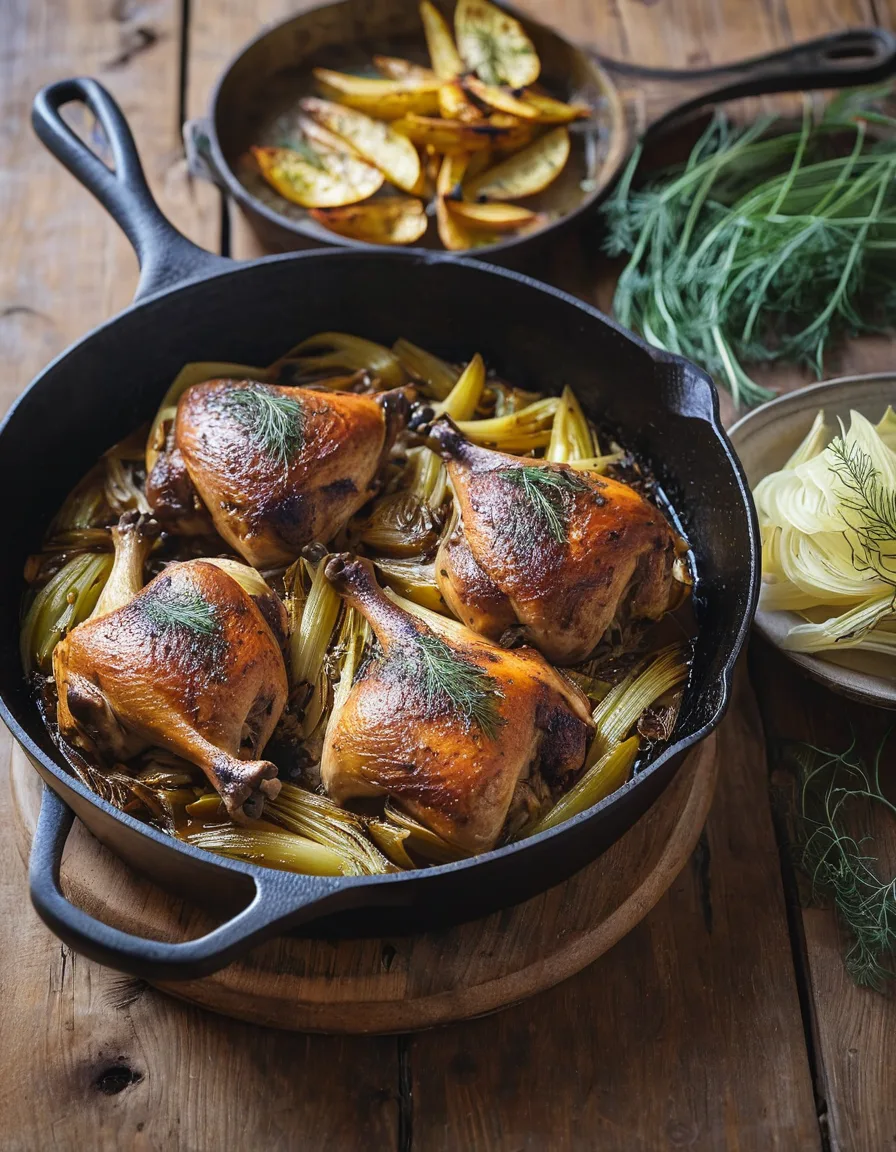
Ingredients · 4 servings
| 4 whole | bone-in, skin-on chicken thighs |
| 1 large | fennel bulb grow it ↗ |
| 1 medium | yellow onion · pantry |
| 3 cloves | garlic grow it ↗ · pantry |
| 0.75 cup | dry white wine |
| 0.75 cup | chicken stock · pantry |
| 1 tablespoon | Dijon mustard · pantry |
| 4 sprigs | fresh thyme |
| 1 tablespoon | butter · pantry |
| 1 tablespoon | olive oil · pantry |
| 1.5 teaspoon | kosher salt · pantry |
| 0.5 teaspoon | black pepper · pantry |
Method
- Pat chicken thighs completely dry and season both sides with salt and pepper.
- Heat olive oil in a large skillet over medium-high heat. Lay thighs skin-side down and sear undisturbed 7-8 minutes until deeply golden and the fat has rendered. Flip and sear 2 more minutes. Transfer chicken to a plate.
- Pour off all but 1 tablespoon of fat from the skillet. Add onion and fennel, season with a pinch of salt, and cook over medium heat 6-7 minutes, stirring occasionally, until softened and lightly browned. Add garlic and cook 30 seconds.
- Pour in the white wine, scraping up the browned bits on the bottom of the pan. Simmer 2 minutes to cook off the raw alcohol smell.
- Add chicken stock and thyme sprigs. Nestle the chicken thighs skin-side up back into the pan along with any collected juices. Bring to a simmer, cover, and cook 20-25 minutes, until chicken reaches 165F / 74C at the thickest part.
- Transfer chicken to plates. Remove thyme sprigs. Whisk the Dijon mustard into the simmering liquid, then remove from heat and whisk in the cold butter a little at a time until the sauce turns glossy.
- Spoon the fennel, onion, and sauce over the chicken. Top with reserved fennel fronds and serve.
Nutrition · per serving
Estimated from this recipe's ingredients, not lab-measured — not a substitute for professional dietary advice.
Advertisement
The Why · No Anecdotes
The science, not a story about my childhood.
Why render the chicken skin so long before adding liquid?
Chicken skin is mostly fat and connective tissue wrapped around moisture. A slow, dry sear melts the fat out and lets the skin's proteins and sugars brown through the Maillard reaction, building flavor you can't get once liquid is in the pan. If skin goes into the braise un-rendered, it stays flabby and pale because steam, not dry heat, surrounds it from then on.
Why does simmering chicken thighs in liquid take about the same time as roasting them?
Dark meat is full of collagen that needs time and heat above 160F / 71C to convert into gelatin, which is what makes braised thighs fall-apart tender rather than tough. A gentle simmer holds a steady temperature around the meat, so 20-25 minutes is enough for that collagen to break down while the chicken itself clears 165F / 74C well before the connective tissue finishes melting.
Why whisk cold butter into the sauce off the heat instead of just melting it in?
Butter is an emulsion of water droplets suspended in fat. Whisking small cold cubes into a hot but not boiling liquid lets the fat melt gradually while the mustard's lecithin and the butter's own milk solids help bind fat and water together into a thickened, glossy sauce. Add it all at once over high heat and the emulsion breaks, leaving a greasy puddle instead of a cohesive sauce.
Suggested sides — swap freely